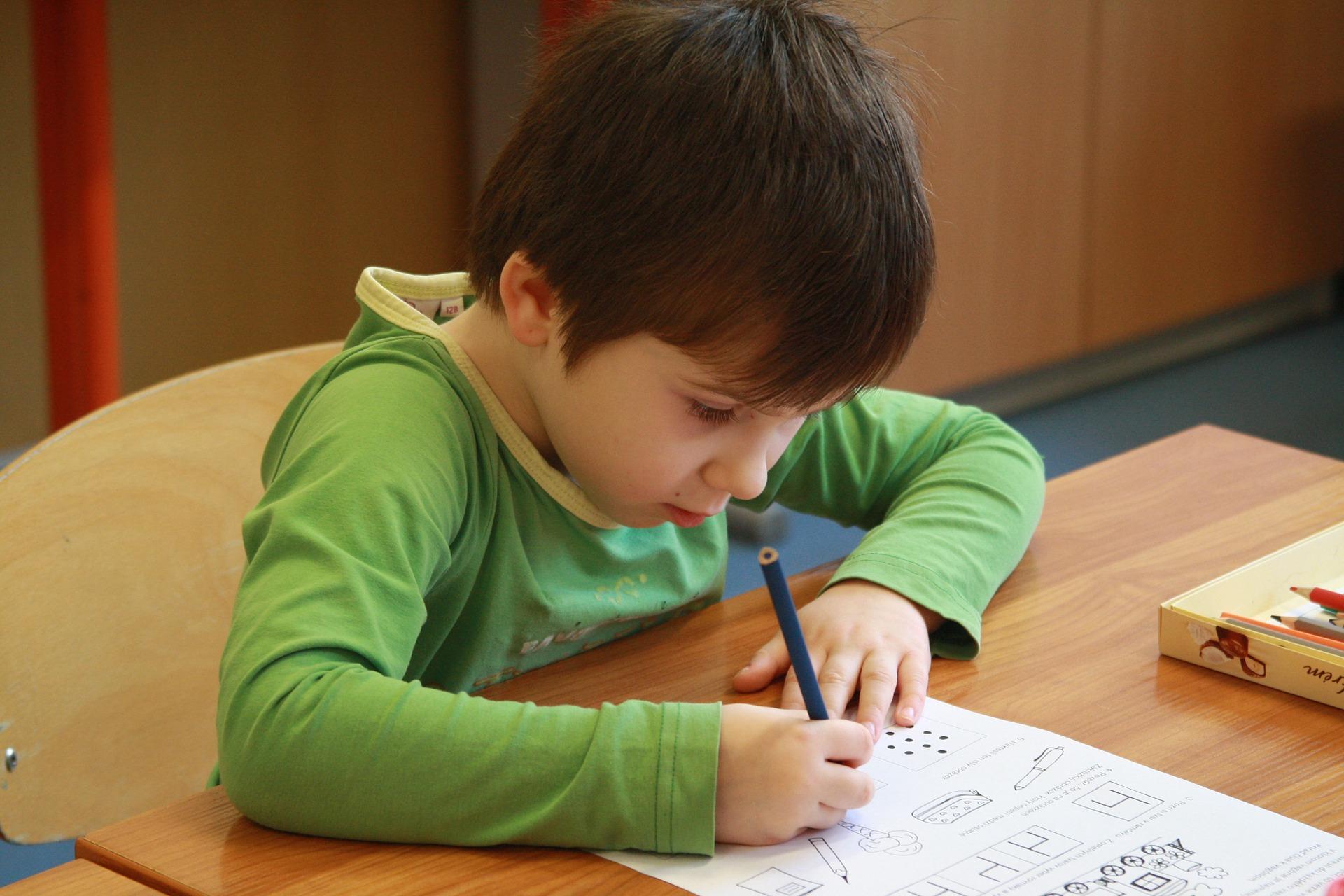

Dyslexia can affect maths when a task relies heavily on reading, mathematical vocabulary, remembering instructions, retrieving facts or keeping several steps organised. It does not automatically mean that a child is poor at maths. The most useful support for maths for dyslexic students is therefore to identify the particular barrier, make the task easier to navigate and give the child enough time to show what they understand.¹,²
✅ Key Takeaways
- 🧠 Ability: Dyslexia does not automatically mean poor mathematical understanding
- 📖 Language: Word problems and unfamiliar maths vocabulary can add extra difficulty
- 🪜 Structure: Breaking longer problems into clear steps can make them easier to follow
- 👀 Layout: Organised working and useful visual representations can reduce unnecessary complexity
- ⏳ Time: Some children benefit from more time to process instructions and retrieve information
- 🤝 Support: Persistent difficulties are worth discussing with the child’s school


📚 What Dyslexia Can Mean for Maths
Dyslexia is primarily associated with difficulties in reading fluency and spelling, but it can also affect the acquisition of other skills, including mathematics. Working memory and processing speed can contribute to its impact, although dyslexia varies considerably from one person to another.¹
That variation is important when discussing dyslexia and maths. Some children with dyslexia reason confidently with numbers but find written questions difficult. Others may experience additional difficulty retrieving arithmetic facts, following procedures or keeping several pieces of information organised.
A 2024 study of 75 children with dyslexia found considerable variation in mathematical profiles. Some showed no mathematical deficit, while others experienced difficulties with number processing, arithmetic procedures, fact retrieval or geometry.³ This is another reason not to assume that dyslexia creates one predictable pattern of mathematical difficulty.
Reading-heavy tasks can be particularly demanding. A child may understand the calculation itself but struggle to interpret a word problem, remember mathematical vocabulary or follow several written instructions. The British Dyslexia Association also identifies possible difficulties with sequencing, number facts, procedures, symbols and terminology among some dyslexic learners.²
Regular maths at home activities can reinforce concepts without making every practice session depend on written instructions. Cooking, money, games and measurement all offer opportunities to work with numbers in familiar situations.
🧠 Different Strengths, Different Barriers

A child may understand a mathematical concept but need support with the language, layout or sequence of the task. Identifying the specific barrier is more useful than assuming every difficulty comes directly from dyslexia.
🔍 Difficulties Parents May Notice
The challenges associated with maths for dyslexic students do not all occur together. One child might calculate confidently but struggle to understand the wording of a problem, while another may understand a method during a lesson but find it difficult to retrieve the steps later.
Rather than looking for a fixed checklist, notice where the difficulty actually occurs and whether the same pattern keeps returning.
🔍 Difficulties Worth Looking at More Closely
These are possible learning difficulties, not diagnostic criteria. Similar challenges can have other causes, and one isolated problem tells you very little by itself.
A useful question for parents is whether the child understands once the task is presented differently. If reading the question aloud, separating its steps or reorganising the page suddenly makes the mathematics manageable, that tells you something useful about where support may be needed.
🛠️ Strategies That Can Make Maths More Accessible
Effective support should make the mathematics easier to navigate without unnecessarily reducing the challenge. For many children, this means clearer instructions, organised working and opportunities to revisit the reasoning behind a method.
Worked examples can be helpful because they present a problem together with its solution. This allows learners to concentrate on why particular steps were chosen instead of having to complete every procedure at the same time. The Education Endowment Foundation highlights worked examples as a way to help pupils compare strategies, focus on reasoning and discuss why particular methods were chosen.⁴
Useful approaches include:
- 🪜 Break down longer tasks: Present one manageable stage at a time when several steps are causing confusion
- 🗣️ Pre-teach vocabulary: Explain unfamiliar mathematical terms before using them inside a complicated problem
- 📄 Organise working clearly: Give each stage enough space and use one calculation step per line where helpful
- 🔁 Revisit previous learning: Briefly return to familiar methods instead of assuming that successful work once guarantees instant recall later
- 👀 Use purposeful visuals: Choose diagrams, number lines or manipulatives because they clarify the maths, not because all dyslexic learners are assumed to be visual learners
- 💬 Ask for reasoning: Encourage the child to explain what they know and what they plan to try next
- ⏳ Allow processing time: Avoid treating speed as the main measure of mathematical ability
Support should respond to the individual learner rather than assumptions about gender differences in mathematics or which students are expected to find the subject easier.
🧩 Make the Problem Easier to Navigate
👀 Make It Visible
Use diagrams, number lines, manipulatives and clear spacing when they genuinely reveal the mathematical relationship.
🪜 Break It Down
Separate longer calculations into distinct stages so the child can see what has already been completed and what comes next.
💬 Talk It Through
Ask the child to identify what is known, explain what the question asks and describe why they chose a particular method.
✖️ Algebra and Dyslexia
Algebra can add another layer of difficulty because students have to coordinate numbers, letters, mathematical symbols, vocabulary and rules. Research into algebra education for students experiencing learning difficulties shows that learners may benefit from explicit instruction, worked examples and multiple representations of mathematical ideas.⁵
The relationship between algebra and dyslexia still depends on the individual child. Someone may understand the underlying algebraic relationship but find it harder to interpret written instructions, remember a new term or keep several transformations organised on the page.
Clear working can reduce those extra demands. Instead of compressing several transformations into one crowded line, put each step on its own line and discuss what changed.
➗ Make Algebra Easier to Follow
Instead of:
2x + 7 = 19 → 2x = 12 → x = 6
write:
2x + 7 = 19
2x = 12
x = 6
Then ask what changed between each line and why.

For algebra and dyslexia, it can also help to introduce important vocabulary before a new topic, place a worked example beside a similar question and use algebra tiles or other representations when they make an abstract relationship easier to see.
The aim is not to make algebra simplistic. It is to remove avoidable language, memory or organisation demands so that the learner can concentrate on the mathematical reasoning.
⚖️ Dyslexia and Dyscalculia Are Different
Dyslexia and dyscalculia are separate learning difficulties. A child can experience dyslexia without dyscalculia, dyscalculia without dyslexia or both together.
Research comparing the conditions has found distinguishable neuropsychological profiles, including stronger associations between dyslexia and phonological or lexical processing and between dyscalculia and numerical processing.⁶ Their effects can nevertheless overlap in everyday maths learning.
⚖️ Dyslexia and Dyscalculia Compared
| Dyslexia | Dyscalculia | |
|---|---|---|
| Main area | Reading fluency, spelling and related processing | Understanding and processing numbers and quantities |
| Possible maths impact | Language, retrieval, sequencing or written procedures may make some tasks harder | Difficulties are particularly associated with numerical magnitude and number relationships |
| Can occur alone? | Yes | Yes |
| Can co-occur? | Yes | Yes |
This distinction matters because forgetting a procedure or finding a word problem difficult should not automatically be labelled dyscalculia. Persistent problems understanding quantities, numerical magnitude, estimation or place value may instead be among the signs of dyscalculia, particularly when difficulties continue despite appropriate teaching.
Parents do not need to decide which label applies themselves. A persistent pattern is something to discuss with teachers or an appropriately qualified professional.
🌱 Protect Confidence While Building Skills
Children can become frustrated when they understand something during a lesson but cannot retrieve it easily later, or when reading demands obscure mathematics they could otherwise solve.
Try to separate an error from the child’s ability. Instead of saying “You know this” or immediately giving the correct answer, identify which part has been forgotten and make that part visible again.
It also helps to recognise useful mathematical behaviour rather than speed alone. Checking an answer, noticing an error, explaining a method or choosing an appropriate representation all demonstrate mathematical thinking.
Mistakes can also provide useful information. Ask the child to show where they started and what happened next. A wrong answer may come from one missed symbol or misunderstood word rather than a lack of mathematical understanding.

Repeated problems can affect a child’s willingness to attempt maths. If the subject has become associated with persistent avoidance, worry or panic, fear of maths may need attention alongside the underlying learning difficulty.
A supportive approach does not mean avoiding challenging work. It means making the task clear enough for the child to engage with the challenge without unnecessary barriers.
🇲🇹 Where Parents in Malta Can Find Support
If difficulties continue, parents in Malta can begin by speaking with the child’s school and sharing specific examples. Ask whether teachers notice the same pattern, what support has already been tried and which strategies seem to help.
Malta’s Specific Learning Difficulties Service supports students, parents and educators with difficulties including dyslexia. Dyslexia specialists provide practical guidance and strategies, while parents can seek advice about supporting learning at home.⁷
The service states that applications for a dyslexia assessment can be made from age eight onwards and recommends beginning the assessment referral process through the child’s school. After an assessment, a feedback meeting is held and a report containing recommendations is shared with the family and school.⁷
🇲🇹 Where to Start
Step 1
📝 Note the difficulty
Keep examples of tasks that repeatedly cause problems and note what seems to make them easier.
Step 2
🏫 Speak with the school
Compare what happens at home with what teachers observe during lessons.
Step 3
🧩 Review existing support
Ask which adjustments or strategies have already been tried and whether they have helped.
Step 4
🔎 Explore specialist guidance
Where appropriate, discuss support or assessment through Malta’s SpLD Service.
Parents do not need to solve every difficulty themselves. The purpose of seeking support is to understand what is getting in the way and identify strategies that give the child better access to the mathematics.
🌿 Support the Child, Not a Label
Dyslexia does not determine mathematical potential. The useful question is not whether a dyslexic child is “good” or “bad” at maths, but which parts of the task are creating difficulty.
Clear language, manageable steps, organised working, suitable representations and enough processing time can all make mathematics more accessible. Good support for dyslexia and maths starts with the individual child rather than a fixed list of assumptions.
📄 Keep Written Work Clear

Organisation matters more than decoration. Clear spacing, one step per line and enough room to show working can help a child follow a calculation and return to an earlier step when something goes wrong.
Parents can reinforce these habits at home while working with teachers when problems persist. Once you understand whether the main barrier involves reading, vocabulary, retrieval, organisation, confidence or the mathematical concept itself, it becomes much easier to choose useful support.
📚 References
- “What Is Dyslexia?” British Dyslexia Association, https://www.bdadyslexia.org.uk/dyslexia/about-dyslexia/what-is-dyslexia. Accessed 22 Sept. 2026.
- “How Does Dyslexia Affect Maths Learning?” British Dyslexia Association, https://www.bdadyslexia.org.uk/dyscalculia/how-can-i-identify-dyscalculia/how-does-dyslexia-affect-maths-learning. Accessed 22 Sept. 2026.
- Pedemonte, B., et al. “Profiles of Mathematical Deficits in Children with Dyslexia.” npj Science of Learning, vol. 9, no. 7, 2024, https://doi.org/10.1038/s41539-024-00217-x. Accessed 22 Sept. 2026.
- “Using Worked Examples to Support Mathematical Problem-Solving.” Education Endowment Foundation, 11 May 2022, https://educationendowmentfoundation.org.uk/news/eef-blog-using-worked-examples-to-support-mathematical-problem-solving. Accessed 22 Sept. 2026.
- Klee-Schramm, Isabelle, Antonia Peters, and Benjamin Rott. “Algebra Education for Secondary Students with Difficulties: A Review of the Literature From 2019 to 2023.” International Journal of Science and Mathematics Education, vol. 24, 2026, article 55, https://doi.org/10.1007/s10763-026-10676-w. Accessed 22 Sept. 2026.
- Mingozzi, Alessandra, Valentina Tobia, and Gian Marco Marzocchi. “Dyslexia and Dyscalculia: Which Neuropsychological Processes Distinguish the Two Developmental Disorders?” Child Neuropsychology, vol. 30, no. 1, 2024, pp. 1–21, https://doi.org/10.1080/09297049.2023.2170997. Accessed 22 Sept. 2026.
- “SpLD - Specific Learning Difficulties Service.” myChild, Government of Malta, https://mychild.gov.mt/en/service/mc-spld-specific-learning-difficulties-service. Accessed 22 Sept. 2026.
Summarise with AI:
Did you like this article? Leave a rating!

 Loading...