

Maths anxiety is worry, tension or helplessness linked specifically to mathematics. A fear of maths can develop after repeated difficulty, gaps in earlier learning, pressure to answer quickly, negative experiences or messages suggesting that being “good at maths” is something you either have or do not have. Parents can help by identifying the situation that triggers the anxiety, rebuilding missing foundations gradually and making mistakes safer to discuss. Maths anxiety does not automatically mean a child has low mathematical ability or a specific learning difficulty.¹,³
🧩 Fear of Maths at a Glance
😟 Why It Can Develop
- Repeated difficulty: A child repeatedly struggles with the same topic
- Knowledge gaps: Earlier concepts were never fully understood
- Pressure: Timed work, tests or public answers feel threatening
- Negative experiences: Mistakes have led to embarrassment or criticism
- Fixed messages: Maths is presented as something you are either naturally good or bad at
🌱 What Can Help
- Identify the trigger: Work out which situations cause the most worry
- Rebuild foundations: Return to missing skills gradually
- Reduce time pressure: Focus on understanding before speed
- Break tasks down: Make longer problems more manageable
- Praise strategies: Notice reasoning, persistence and useful methods


🧠 What Is Maths Anxiety?
Maths anxiety describes negative emotional responses such as worry, tension or helplessness when dealing with mathematics. It is more specific than simply disliking the subject. A child might say they dislike maths but still complete tasks calmly, while another may understand the topic yet become tense, avoidant or unable to think clearly when they need to use it.
PISA 2022 illustrates how common these feelings can be. Across OECD countries, around 40% of 15-year-olds reported feeling nervous, helpless or anxious while solving maths problems or doing maths homework. Around 65% worried about getting poor maths marks.¹ These are international averages, not Malta-specific figures.
Research also shows that maths anxiety and achievement can influence one another. Lower achievement can contribute to anxiety, while anxiety can make it harder to engage with maths or perform effectively. Avoidance can then help maintain that cycle.²
Around 40% of 15-year-olds across OECD countries reported feeling nervous, helpless or anxious while solving maths problems or doing maths homework in PISA 2022.¹
The term “maths phobia” is sometimes used informally, but it should not be treated as a diagnosis. The more useful question is what a child is experiencing, when it happens and how much it is affecting their learning.
🔄 Why Can a Fear of Maths Develop?
There is rarely one universal cause. A 2026 review of maths anxiety in children describes influences at individual, interpersonal and wider cultural levels, including early maths experiences, beliefs about ability, avoidance, parents’ and teachers’ practices and broader attitudes towards mathematics.³
A child who repeatedly struggles with fractions, place value or multiplication may begin to expect future maths work to go badly. In that situation, low-pressure maths at home activities can help rebuild familiarity without recreating the same pressure associated with schoolwork.
Knowledge gaps can matter too. Maths often builds on earlier concepts, so one weak foundation can make later topics feel much harder. A child struggling with percentages, for example, may actually need more support with fractions or place value before the new topic becomes manageable.
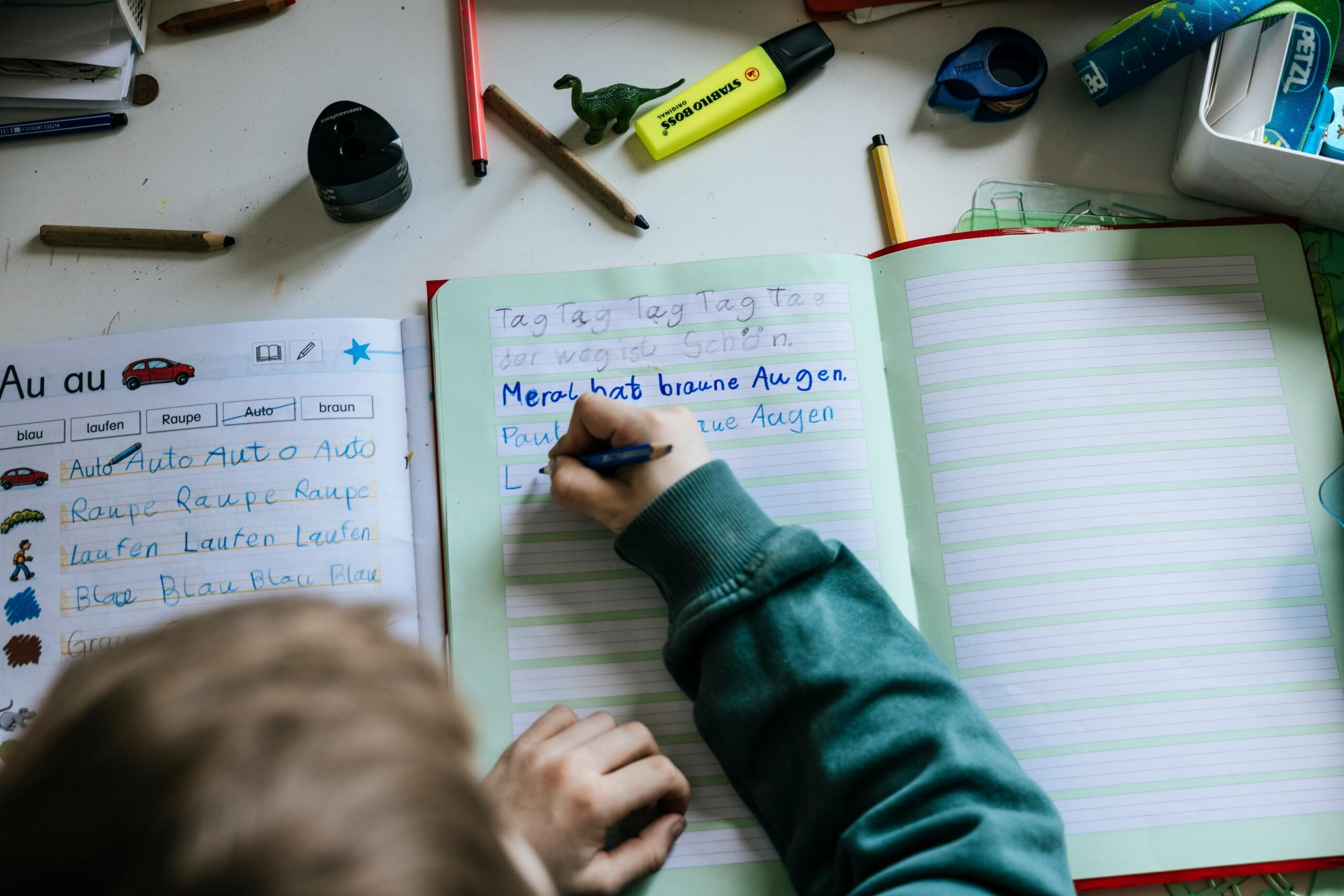
Pressure can come from the environment as well. Being asked to answer quickly, making a mistake in front of classmates or feeling that every exercise is a test can make maths increasingly uncomfortable for some children.
Family messages can also shape expectations. Saying “I was never a maths person either” may sound reassuring, but it can unintentionally suggest that mathematical ability is fixed. A calmer message is that some topics take more time, explanation or practice than others.
😰 What Math Anxiety Symptoms Can Look Like
Math anxiety symptoms can appear in thoughts, behaviour and physical responses. Not every child will experience all of them, and an occasional nervous reaction before a test is not enough to establish a persistent anxiety problem.
A child may worry that they will fail before they have even started, describe themselves as “bad at maths” or feel helpless when they see a particular kind of problem. Others show the difficulty through avoidance, procrastination or reluctance to answer questions.
Physical anxiety responses are also possible. OECD measures of mathematics anxiety include feeling tense, nervous, helpless or worried around maths tasks and assessments.¹
🔎 Maths Anxiety Can Show Up in Different Ways
💭 Feelings
- Worry: Expecting to get the answer wrong
- Helplessness: Feeling unable to begin
- Fear of failure: Assuming a mistake means poor ability
🚪 Behaviour
- Avoidance: Trying to escape maths tasks
- Procrastination: Putting homework off repeatedly
- Withdrawal: Avoiding participation or answers in class
😣 Under Pressure
- Tension: Feeling tense while working on maths
- Nervousness: Feeling nervous before or during maths tasks
- Helplessness: Feeling unsure how to begin or continue
The important pattern is persistence and impact. If these responses appear regularly and interfere with schoolwork or everyday life, they deserve more attention than a temporary dislike of one topic.
🧱 Skills Gaps Can Feed Anxiety
A fear of maths can sometimes begin with a very ordinary learning problem. If one concept was never properly understood, the topics built on top of it can become increasingly confusing.
Longitudinal research with primary-school children has found a reciprocal relationship between maths achievement and maths anxiety. Earlier achievement predicted later anxiety, while earlier anxiety also predicted later achievement.⁴ This supports the idea that difficulty and worry can reinforce one another rather than always having a single starting point.
The practical response is to identify where understanding first breaks down. If a child struggles with division, for example, the useful question may be whether multiplication facts, place value or the meaning of division itself are secure.
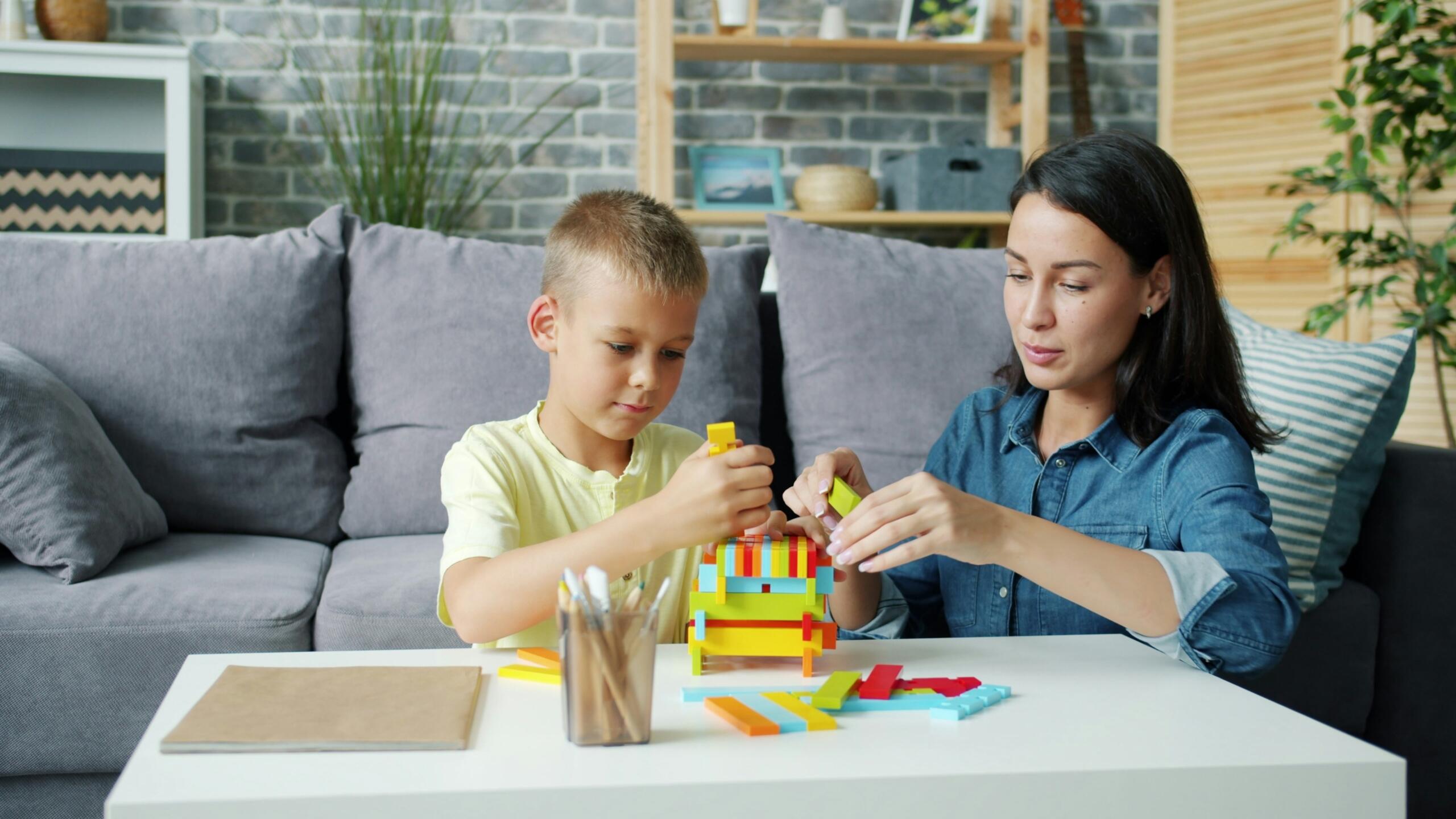
Start below the point where the child becomes overwhelmed and build forward gradually. Success with a simpler task can provide evidence that the problem is specific and solvable, rather than proof that the child “cannot do maths”.
⚖️ Maths Anxiety, Skills Gaps and Learning Difficulties
Maths difficulties can look similar from the outside even when the underlying reasons are different. A child may avoid a word problem because they feel anxious, because the language is difficult or because they do not understand the mathematical concept.
A child experiencing dyslexia and maths difficulties may find written instructions, vocabulary, retrieval or multi-step procedures particularly demanding. That is different from maths anxiety, although repeated difficulty can contribute to anxiety over time.
Dyscalculia is different again. Current guidance describes it as a persistent difficulty particularly associated with understanding numerical magnitude, quantities, estimation and place value. Maths anxiety commonly co-occurs with maths learning difficulties, but it is not itself an indicator of dyscalculia.⁵
⚖️ Similar Struggles, Different Reasons
| Maths anxiety | Skills gap | Specific learning difficulty | |
|---|---|---|---|
| Main issue | Worry or tension around maths | Earlier knowledge is missing or insecure | Persistent difficulty affecting particular aspects of learning |
| Can affect performance? | Yes | Yes | Yes |
| Can overlap with other issues? | Yes | Yes | Yes |
| Useful first step | Identify triggers and reduce unnecessary pressure | Rebuild missing knowledge | Discuss appropriate support and assessment where needed |
Parents do not need to diagnose the cause themselves. The more useful approach is to notice the pattern, collect examples and compare what happens at home with what teachers see at school.
🌱 How Parents Can Reduce Pressure and Rebuild Confidence
Start by identifying the specific situation that causes the most anxiety. “Maths” is too broad. A child may actually be worried about timed multiplication tests, word problems, fractions, answering aloud or remembering a procedure under pressure.
Once the trigger is clearer, reduce the difficulty enough for the child to engage. Practise without a timer before working on speed. Break a long calculation into stages. Ask what they already know instead of immediately explaining the full solution.
Mistakes should provide information. If an answer is wrong, ask where the child started and which step came next. This makes it easier to see whether the problem involves understanding, memory, reading or one small calculation error.
Praise can also be more specific. Instead of saying “You’re so clever”, notice when a child checks their answer, tries another strategy or explains their reasoning clearly.
🤝 Make Practice Feel Manageable
Start with a task the child can approach calmly, then increase the challenge gradually. Give enough time to think, ask what they already know and treat mistakes as information rather than evidence that they cannot do maths.
Short practical activities can also help when formal worksheets have become associated with pressure. Shopping, cooking, games and everyday calculations give children chances to use maths for a purpose rather than simply produce a score.
Avoid comparing children with siblings or classmates. The aim is to help the individual learner make progress from their own starting point.
💬 Helpful Things to Say, and What to Avoid
Language can either reduce or reinforce pressure. You do not need to make every comment perfectly positive, but it helps to avoid statements that turn one difficult moment into a judgement about ability.
🗣️ Change the Conversation
| Instead of | Try |
|---|---|
| “You should know this by now.” | “Which part stopped making sense?” |
| “You’re just not a maths person.” | “This topic may need a different approach.” |
| “Your sister can do this.” | “Show me what you understand so far.” |
| “Hurry up.” | “Take your time and talk me through it.” |
| “That’s wrong.” | “Let’s see where the method changed.” |
Adults should also be careful about messages linked to gender differences in mathematics. Confidence and anxiety can differ between groups even when mathematical performance is similar, so stereotypes are poor guides to an individual child’s potential.
Questions are often more useful than immediate corrections. Asking “What have you tried?” or “Which step feels unclear?” gives the child more room to think and makes the difficulty easier to identify.
🔍 When Persistent Difficulty Needs More Investigation
Anxiety should not automatically be treated as the cause of every maths problem. Sometimes worry develops because a child has been struggling with a particular learning difficulty for a long time.
Other children may have gaps in previous learning, language-related difficulties or a different support need. The important point is to look beyond “they hate maths” and ask what repeatedly happens when the child tries to engage with it.
Speak to the teacher when the same difficulties appear repeatedly, avoidance is increasing or maths is causing significant distress. Bring concrete examples and ask what the school has noticed, which topics seem affected and what support has already been tried.
Persistent problems with quantities, numerical magnitude, estimation or place value can be among the signs of dyscalculia, particularly when they remain significant despite appropriate teaching and practice.⁵
🇲🇹 Where Parents in Malta Can Ask for Support
In Malta, the child’s school is usually a practical starting point when maths anxiety or persistent difficulty is affecting learning. Share specific examples and ask whether similar patterns appear in class.
The School Counselling Service supports the emotional wellbeing of compulsory-school-age learners attending State, Church and Independent schools in Malta and Gozo. It can provide individual counselling and works with families, schools and other professionals when anxiety or distress is affecting a student.⁶
For children aged 6 to 16 attending State schools, the School Psychological Service can provide psychological assessment and support for learning, emotional, behavioural and anxiety-related needs. Referrals are made through the child’s school.⁷
🇲🇹 Where to Start
Step 1
📝 Note the pattern
Record which topics, situations or types of task repeatedly trigger worry or avoidance.
Step 2
🏫 Speak with the teacher
Compare what happens at home with what teachers observe in lessons.
Step 3
🧩 Review learning needs
Ask whether there are missing foundations or other persistent learning difficulties that need targeted support.
Step 4
🤝 Seek further support
If anxiety significantly affects learning or wellbeing, discuss appropriate school-based or professional support.
The aim is not to attach a label as quickly as possible. It is to understand whether the child mainly needs clearer teaching, emotional support, investigation of a learning difficulty or some combination of these.
🌿 Rebuilding Confidence Takes Time
Reducing a fear of maths does not mean making every maths task easy or expecting anxiety to disappear after a few successful exercises.
Progress might first look like attempting a question without immediately giving up, explaining one step more clearly or returning to a topic that previously caused avoidance. Those changes matter.
The goal is to help children approach mathematics without unnecessary fear, understand where difficulties come from and experience enough manageable success to keep engaging. Maths anxiety can improve, but useful support starts with the actual child, their current skills and the situations that make maths feel difficult.
📚 References
- “PISA 2022 Results (Volume V): Learning Strategies and Attitudes for Life.” OECD, 13 Nov. 2024, https://www.oecd.org/en/publications/pisa-2022-results-volume-v_c2e44201-en.html. Accessed 23 Sept. 2026.
- Lau, N. T. T., D. Ansari, and H. M. Sokolowski. “Unraveling the Interplay between Math Anxiety and Math Achievement.” Trends in Cognitive Sciences, vol. 28, no. 10, 2024, pp. 937–947, https://doi.org/10.1016/j.tics.2024.07.006. Accessed 23 Sept. 2026.
- Retanal, Fraulein, and Erin A. Maloney. “Individual, Interpersonal and Sociocultural Contributors to Maths Anxiety in Children.” Nature Reviews Psychology, vol. 5, 2026, pp. 93–104, https://doi.org/10.1038/s44159-025-00519-w. Accessed 23 Sept. 2026.
- Szczygieł, Monika, Denes Szűcs, and Enrico Toffalini. “Math Anxiety and Math Achievement in Primary School Children: Longitudinal Relationship and Predictors.” Learning and Instruction, vol. 92, 2024, article 101906, https://doi.org/10.1016/j.learninstruc.2024.101906. Accessed 23 Sept. 2026.
- “SASC Definition of a Specific Learning Difficulty in Mathematics (2025).” British Dyslexia Association, https://www.bdadyslexia.org.uk/dyscalculia/sasc-definition-of-a-specific-learning-difficulty-in-mathematics-2025. Accessed 23 Sept. 2026.
- “Counselling Services.” myChild, Government of Malta, https://mychild.gov.mt/en/service/counselling-services. Accessed 23 Sept. 2026.
- “The School Psychological Service (SPS).” myChild, Government of Malta, https://mychild.gov.mt/en/service/mc-the-school-psychological-service-sps. Accessed 23 Sept. 2026.
Summarise with AI:
Did you like this article? Leave a rating!

 Loading...