

Are boys better at maths than girls? Research does not support that as a general rule. Gender differences in mathematics vary between countries, ages and assessments, and average scores tell only part of the story. In Malta, boys and girls achieved similar average mathematics performance in PISA 2022.¹ Differences can still appear in confidence, anxiety, the distribution of high and low performers and later STEM participation, so these measures should not be treated as evidence that one gender is naturally better at maths.
No. Research does not support a universal rule that one gender is better at maths. In Malta, boys and girls performed at similar levels on average in PISA 2022. Internationally, the size and direction of maths performance gaps differ considerably between education systems.¹


📊 Do Boys and Girls Actually Perform Differently in Maths?
Malta provides a useful example of why averages need careful interpretation. In PISA 2022, Maltese boys and girls performed at similar levels on average in mathematics.¹ That does not mean every part of the results was identical.
The share of students performing below Level 2 was higher among boys, at 35%, compared with 30% among girls. At the top end, 9% of boys and 5% of girls reached Levels 5 or 6.¹ In other words, the average was similar even though the distribution of scores differed.
The international picture is even more varied. Across the education systems participating in PISA 2022, boys outperformed girls in mathematics in 40 countries and economies, girls outperformed boys in 17, while 24 showed no statistically significant difference.¹ That variation is important when discussing gender differences in mathematics because it shows that there is no single pattern that applies everywhere.
Average differences also say very little about one individual child. A girl who excels at mathematical reasoning does not become less capable because a particular assessment shows a male advantage at the top end, just as a boy who struggles with maths cannot be understood through a population average.
For parents, supporting regular maths at home can therefore be much more useful than comparing a child with expectations about their gender. Everyday problem-solving, games, cooking and money activities give children opportunities to build confidence around mathematics without turning every task into a test.

🧠 Performance and Confidence Are Not the Same Thing
A student can perform well in maths without feeling particularly confident, while another may feel highly capable despite making more mistakes. Performance and self-belief are related, but they are not interchangeable.
A 2024 study involving 866 ninth-grade students found that boys reported higher beliefs in their own maths competence than girls even though there was no gender difference in their actual performance on the mathematical tasks used in the study.⁴ Girls also reported lower enjoyment and higher anxiety.⁴
This distinction matters because questions about a gender gap in maths are often answered using only test scores. A test can tell us something about what students demonstrated under particular conditions. It cannot, by itself, tell us whether they enjoy maths, believe they are capable of succeeding or will choose a mathematics-heavy subject later.
🔄 Same Result, Different Experience
📈 Performance
What a student demonstrates through classwork, assessments and problem-solving.
A performance difference may vary between tests, ages and countries.
💭 Confidence
How capable a student believes they are in mathematics.
Confidence can influence whether a student volunteers an answer, attempts a difficult problem or considers further maths study.
Recognising this difference helps adults avoid mistaking confidence for ability. A hesitant child may understand far more than they are willing to demonstrate immediately.
🧩 How Gender Stereotypes in Maths Can Shape Expectations
Gender stereotypes in maths are beliefs about what boys and girls are supposedly naturally good at. They are not evidence about an individual child’s ability.
These ideas can appear subtly. A parent might describe a son as “the maths one” and a daughter as “more creative”. A classmate might assume boys will find a problem easier. Children can also encounter gendered ideas about science, technology or particular careers through media and wider culture.
Research involving more than 30,000 German ninth-grade students examined maths-related gender stereotypes held by students, parents, teachers and classmates. Students’ own stereotypes were associated with their maths self-concept, interest and anxiety. Parents’ stereotypes also showed associations with motivational outcomes, particularly for girls.³ These findings show associations rather than proving that one person’s belief directly causes a particular outcome.
The practical lesson is to keep expectations open.
🚫 Maths Stereotypes Worth Challenging
The same caution applies to specific learning differences. Difficulties involving dyslexia and maths need to be understood through the individual child’s learning profile, not explained through assumptions about gender.
😟 Maths Anxiety Can Create a Different Kind of Gap
Mathematics anxiety refers to feelings of worry, tension or helplessness around maths. It is different from mathematical ability, although the two can be associated.
PISA 2022 found that girls reported higher levels of maths anxiety than boys in most participating countries and economies. Importantly, this difference remained visible even among top-performing students.² This means strong performance does not automatically protect a learner from feeling anxious about mathematics.
OECD data also show a negative association between maths anxiety and mathematics performance across participating education systems.² This does not prove a simple one-way cause. A student may become anxious after repeated difficulties, anxiety may make mathematical tasks harder to approach, or both processes may reinforce one another.
Adults should therefore avoid interpreting hesitation as evidence that a child lacks ability. A learner who is worried about being wrong may participate less readily even when they understand the material.
🌱 Confidence Needs Room to Grow
A child who worries about maths is not necessarily less capable. Give them time to explain their thinking, recognise useful strategies and avoid treating one wrong answer as evidence about their wider ability.
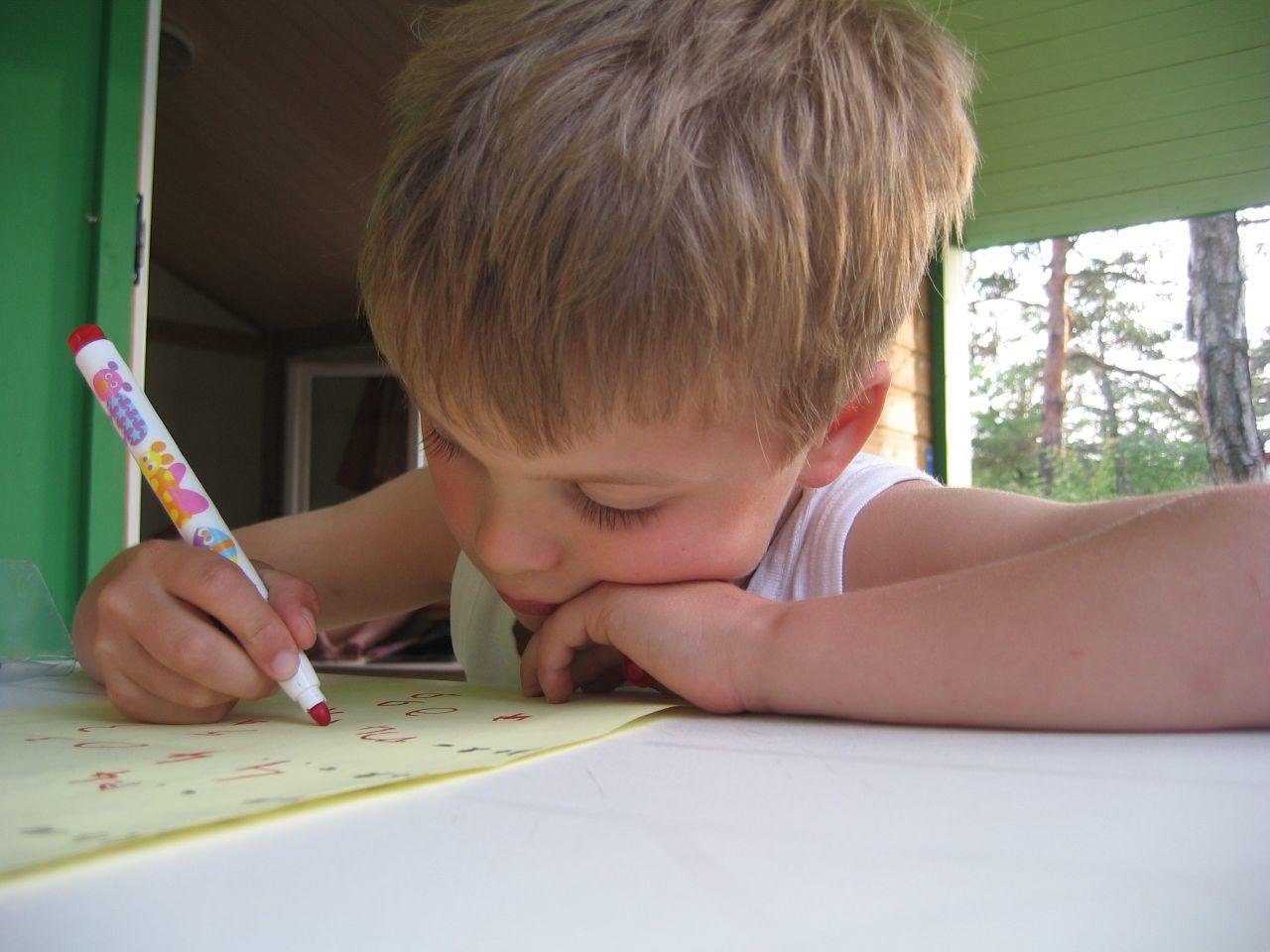
When worry becomes persistent avoidance, tension or distress, fear of maths may need attention alongside the mathematical work itself.
🎓 Why STEM Participation Can Still Differ
Differences in subject choices or career pathways are often used as evidence that one gender is more suited to maths. That conclusion does not follow from the data.
In Malta, women represented 57.3% of all tertiary graduates in 2024. However, STEM qualifications showed a different pattern: 534 male graduates and 264 female graduates completed qualifications in science, technology, engineering and mathematics. STEM represented 12.9% of all tertiary graduates that year.⁵
These figures show a participation difference. They do not tell us that men have greater mathematical ability, nor do they identify one reason for the difference. Subject choices can be associated with many factors, including interests, confidence, school experiences, expectations, exposure to possible careers and wider social influences.
The distinction between performance and participation is therefore essential.
🇲🇹 Maths Performance and STEM Participation in Malta
| Measure | Current evidence | What it means |
|---|---|---|
| Average maths performance | Boys and girls performed similarly in PISA 2022 | No significant average gender advantage in Malta |
| Below Level 2 | 35% of boys and 30% of girls | More boys were among low performers |
| Top performers | 9% of boys and 5% of girls | More boys reached PISA Levels 5 or 6 |
| STEM graduates, 2024 | 534 male and 264 female graduates | More male than female STEM graduates in 2024 |
The first three figures describe mathematical performance among 15-year-olds, while the final row describes later educational participation. They measure different things and should not be treated as interchangeable.¹ ⁵
👨👩👧 What Parents and Teachers Can Do
Parents and teachers cannot control every message a child encounters about gender and maths, but they can avoid reinforcing restrictive expectations themselves.
Start with language. Rather than describing someone as naturally mathematical, comment on specific behaviour: they found a useful strategy, explained their reasoning clearly or persisted with a difficult problem.
Offer the same kinds of mathematical experiences to all children. Puzzles, coding, budgeting, construction, statistics, measuring and problem-solving do not need to be presented as activities for a particular gender.
It is also useful to separate confidence from competence. A child who volunteers answers quickly is not automatically stronger at maths than a quieter child who needs more time to think.
✅ Keep Expectations Open

- 🎯 Praise reasoning: Notice useful strategies, persistence and clear explanations.
- 🗣️ Watch your language: Avoid jokes or comments suggesting that one gender is naturally better at maths.
- 🧩 Offer equal opportunities: Make games, technology, building, finance and problem-solving available without gender labels.
- 👩🔬 Broaden role models: Show children that mathematics and STEM involve people with different backgrounds and identities.
- 💬 Ask about confidence: Hesitation does not necessarily mean a child lacks understanding.
Persistent difficulties also deserve to be considered on their own merits. Problems with quantities, number sense, estimation or place value may, for example, be among the signs of dyscalculia rather than evidence that a child simply belongs to a group that is supposedly “less mathematical”.
🌍 What the Evidence Really Tells Us
The strongest conclusion is not that boys and girls perform identically on every mathematical measure. Differences do appear in particular countries, assessments and parts of the score distribution.
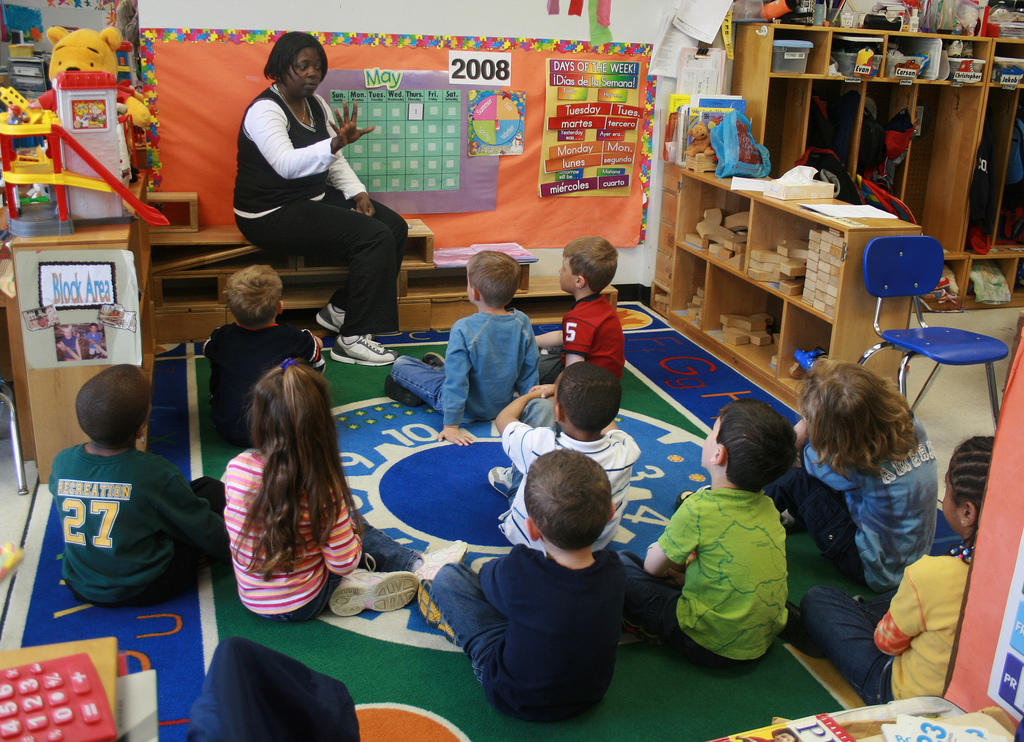
What the evidence does not support is a simple hierarchy in which one gender is naturally better at mathematics. Gender differences in mathematics can look different depending on whether we measure performance, confidence, anxiety, participation or later subject choice.
For parents, an individual child matters much more than a group average. Encourage curiosity, provide opportunities and respond to the difficulty or strength you actually see rather than the one a stereotype tells you to expect.
📚 References
- “PISA 2022 Results: Country Note, Malta.” OECD, 2023, https://www.oecd.org/en/publications/pisa-2022-results-volume-i-and-ii-country-notes_ed6fbcc5-en/malta_fabd54f0-en.html. Accessed 22 Sept. 2026.
- “PISA 2022 Results (Volume V): Learning Strategies and Attitudes for Life.” OECD, 13 Nov. 2024, https://www.oecd.org/en/publications/pisa-2022-results-volume-v_c2e44201-en.html. Accessed 22 Sept. 2026.
- Henschel, Sofie, et al. “How Gender Stereotypes of Students and Significant Others Are Related to Motivational and Affective Outcomes in Mathematics at the End of Secondary School.” Contemporary Educational Psychology, vol. 73, 2023, article 102161, https://doi.org/10.1016/j.cedpsych.2023.102161. Accessed 22 Sept. 2026.
- Van der Beek, Jojanneke P. J., et al. “How Emotions Are Related to Competence Beliefs During Mathematical Problem Solving: Differences Between Boys and Girls.” Learning and Individual Differences, vol. 109, 2024, article 102402, https://doi.org/10.1016/j.lindif.2023.102402. Accessed 22 Sept. 2026.
- “Graduates: 2024.” National Statistics Office Malta, 2025, https://nso.gov.mt/graduates-2024/. Accessed 22 Sept. 2026.
Summarise with AI:
Did you like this article? Leave a rating!

 Loading...