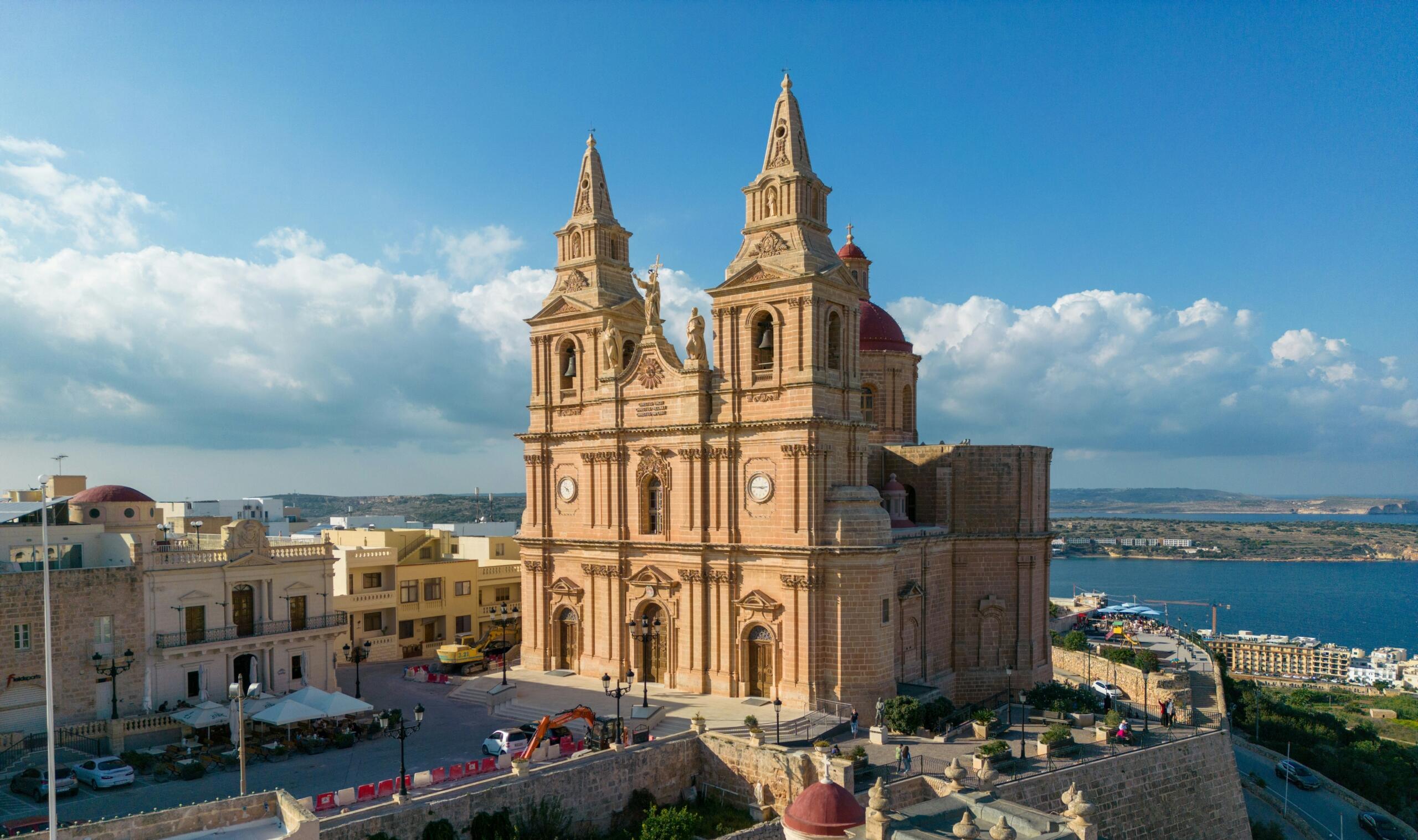

The Maltese festa did not begin with fireworks and band marches. It began in silence, inside the walls of a parish church, with prayers offered in honour of a patron saint. Over the course of several centuries, that quiet act of devotion grew into one of the most vibrant and deeply cherished community traditions in the Mediterranean. Understanding how the festa evolved is to understand something fundamental about Malta itself.
The roots of the Maltese festa are inseparable from the island's Catholic faith, which has been central to Maltese life since Christianity was introduced to the islands following the shipwreck of Saint Paul in approximately 60 AD1. From the earliest parishes, each community gathered to honour its patron saint with prayer and ceremony inside the parroċċa, the parish church that stood at the heart of every village.


Before the Fireworks: The Sacred Origins of the Maltese Festa
For many centuries, the celebration of a patron saint's feast day was a largely internal affair. Masses were held, hymns were sung, and the statue of the patron saint was displayed inside the church for the faithful to venerate. The streets outside remained quiet. It was not until the arrival of the Knights of St John in 15302 that the tradition began to take on a more public character.
The Knights transformed Malta into a deeply Catholic stronghold, investing heavily in the construction of baroque churches and encouraging public displays of religious devotion2. Under their rule, feast day celebrations began to spill out beyond the church walls, with processions moving through village streets and communities gathering in the pjazza to mark the occasion together. This shift from private observance to public celebration was a turning point in the history of the Maltese festa.
60 AD
Saint Paul introduces Christianity to Malta following his shipwreck on the islands
1530
The Knights of St John arrive in Malta, investing in baroque churches and encouraging public religious devotion
1775
Grandmaster De Rohan encourages the Maltese to celebrate feast days outside the church, giving the festa its public character
The most significant figure in the transformation of the Maltese festa was Grandmaster De Rohan, who led the Knights of St John from 1775 to 17972. According to Maltese historian PP Castagna, De Rohan actively encouraged the Maltese population to celebrate feast days beyond the walls of the parish church, bringing music, decoration and communal gathering into the streets for the first time on a significant scale. This encouragement proved to be a turning point and the festa gradually evolved from a private religious observance into the vibrant community celebration that defines Maltese village life today.
Music played a central role in this transformation. String instruments were first introduced to accompany the celebrations, and over time these gave way to the brass band, which became one of the most defining elements of the Maltese festa.
By the 19th century, influenced in part by the marching bands of the British military, formal każin tal-banda or band clubs began to emerge across Malta's villages, quickly becoming pillars of community life that went far beyond music alone3.
serving their communities for over 150 years
Fireworks, Rivalry and the Making of the Modern Festa
By the 20th century, the Maltese festa had grown far beyond its quiet origins. Fireworks, which had first appeared at feast celebrations in the 17th century4, had become the centrepiece of every village's annual celebration. Villages began investing heavily in their pyrotechnic displays, and a fierce but deeply affectionate rivalry developed between parishes over whose fireworks were the most spectacular.
| 📋 Element | ⛪ Then (Pre-19th Century) | 🎆 Now (Modern Festa) |
|---|---|---|
| Celebrations | Held inside the parish church | Spill out across the entire village |
| Music | Simple string instruments | Full brass bands and formal band clubs |
| Fireworks | Rare, used for major occasions only | Central feature of every festa weekend |
| Street decoration | Minimal | Elaborate armar, banners, lights and statues |
| Community involvement | Largely the parish faithful | Entire village and visitors from across Malta and Gozo |
| Duration | Single feast day | Full weekend of events, often preceded by a novena |
Street decoration grew in ambition alongside the fireworks tradition. The armar became increasingly elaborate, with parishes competing to produce the most impressive displays of damask, silver candelabras and painted banners. By the latter half of the 20th century, the Maltese festa had taken on the spectacular character that defines it today.
The tradition of matching hand-painted textile street banners, known as pavaljuni, was introduced in 1934 in Vittoriosa for the feast of St Dominic. The idea quickly spread across Malta and Gozo, and today no festa is complete without these elaborate hand-crafted decorations lining the village streets5.
The story of Malta's fireworks tradition is one that deserves a deeper look. From the volunteer-run village factories known as l-isbieb to the annual Malta International Fireworks Festival held each April at the Grand Harbour in Valletta, pyrotechnics have become an art form that sets Malta apart from anywhere else in the world.
From Village Streets to World Heritage: The UNESCO Inscription
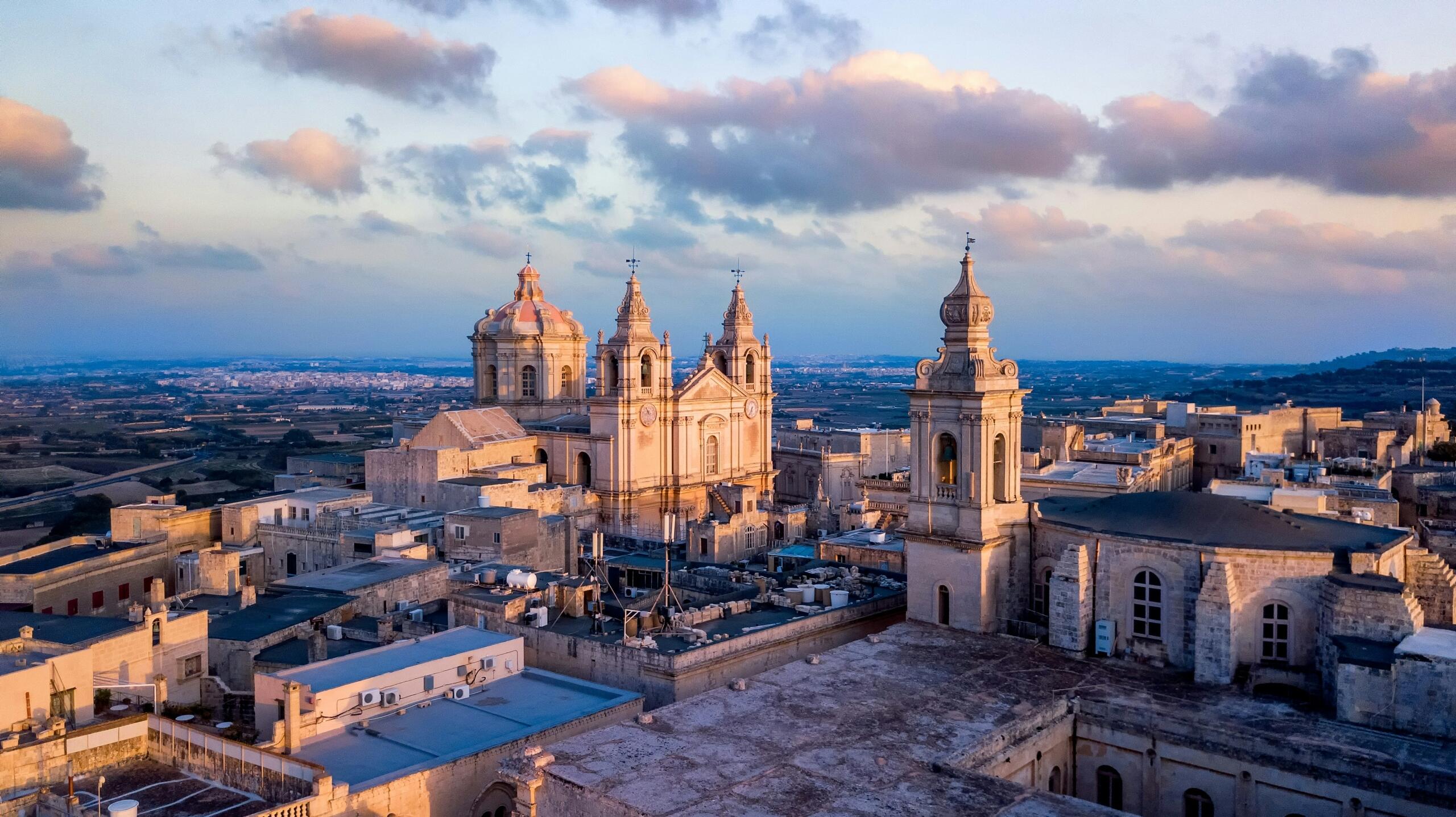
In December 2023, the Maltese village festa was officially inscribed on the UNESCO Representative List of the Intangible Cultural Heritage of Humanity6. The inscription was granted during the 18th Session of the Intergovernmental Committee for the Safeguarding of Intangible Cultural Heritage, held in Botswana. The Maltese festa was recognised specifically for its community values, promotion of the arts, and inclusivity.
The application for inscription was submitted by the Malta Band Clubs Association, with strong support from the Maltese Curia and local festa communities. The process was overseen by the Office for Intangible Cultural Heritage within the Culture Directorate, led by Professor Jean Paul Baldacchino of the University of Malta. The Technical Committee responsible for reviewing applications praised the exemplary manner in which the application was presented, selecting its accompanying audio-visual production as one of the best practices for such submissions6.
Despite its increased secularisation, the festa remains an important part of cultural heritage in Maltese villages, uniting families, outsiders and local communities in a celebration of popular religiosity and local identities.
UNESCO Intangible Cultural Heritage, 2023
The inscription marked a significant moment not just for Malta, but for the thousands of volunteers, musicians, pyrotechnicians and artisans who dedicate themselves to the Maltese festa tradition every year.
For the Maltese, the UNESCO inscription is not simply an honour. It is a reminder of the responsibility that comes with being the custodians of a tradition that has shaped the island's identity, its communities and its calendar for centuries.
A Tradition That Refuses to Fade
Despite the pressures of modernisation and a more secular society, the Maltese festa shows no signs of fading. If anything, it continues to grow in scale, ambition and popular appeal with each passing year. Young Maltese people remain deeply involved in every aspect of the tradition, from the każin tal-banda to the fireworks factories and the church decoration committees, ensuring that the knowledge and passion are passed on to the next generation.
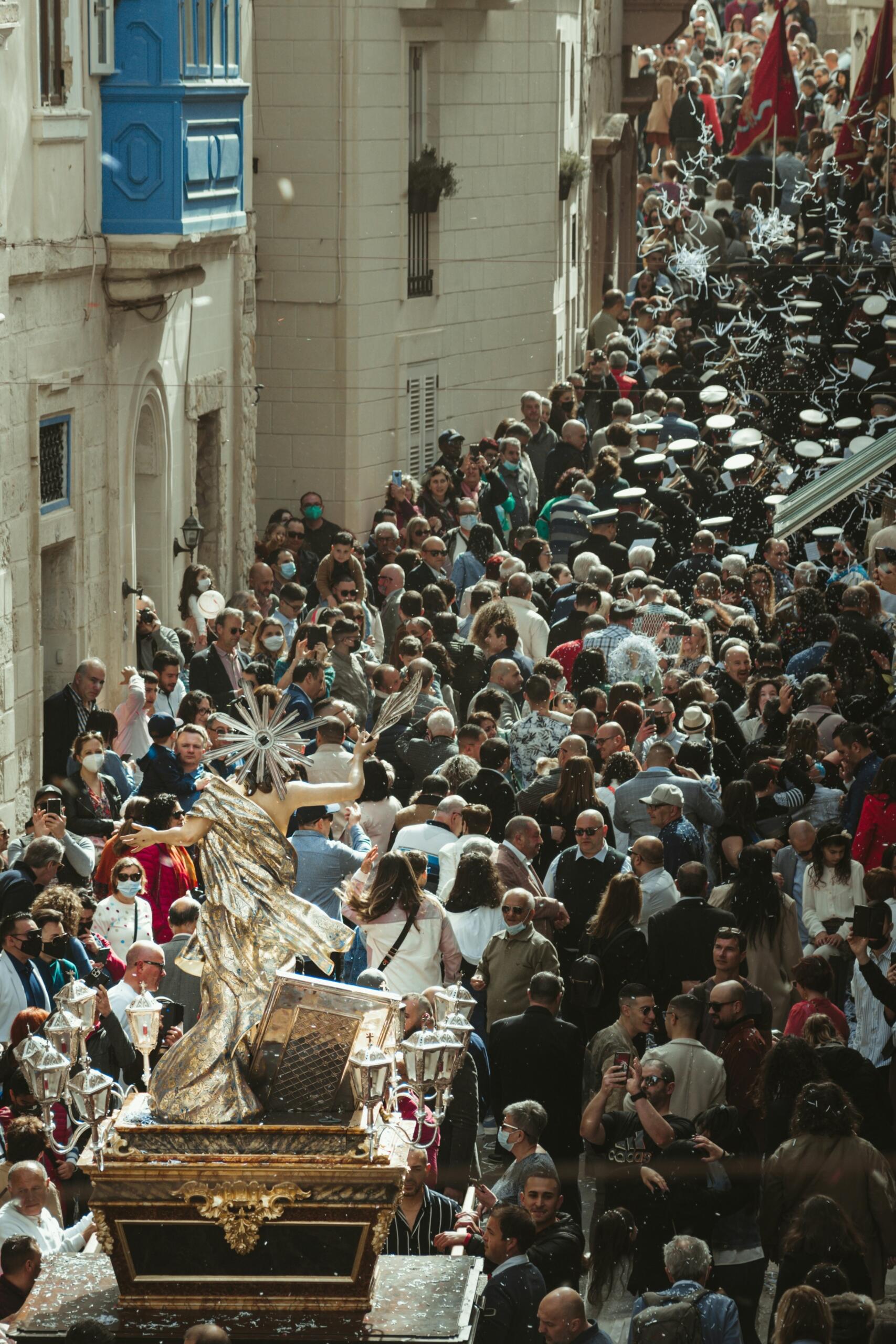
From the narrow village streets of Gozo to the grand piazzas of Malta, the festa brings together generations of families, neighbours and visitors in a shared celebration that has endured for centuries. It is not simply a tradition. It is a living expression of what it means to be Maltese. Whether you have been attending the same celebration since childhood, or are experiencing the colour and noise for the very first time, the festa has a way of drawing you in and making you feel part of something much larger than yourself.
The festa also continues to evolve. New pyrotechnic techniques, more elaborate street decorations and growing international interest have all added new dimensions to a tradition that remains rooted in faith and community.
Whether you are drawn to its history, its fireworks, its music or its deep sense of community, the festa offers something that is increasingly rare in the modern world: a living tradition that genuinely belongs to the people who created it. The story of the Maltese festa is still being written, and every summer, in villages across Malta and Gozo, another chapter begins.
For those who want to experience the festa firsthand, there is no substitute for being there. The sights, sounds and smells of a Maltese village during festa week are unlike anything else in the Mediterranean.
References
- "Feast of St Paul's Shipwreck in Malta." AX Hotels Malta, 2026. Available at: https://axhotelsmalta.com/discover-activities-in-malta/activities/feast-st-pauls-shipwreck-malta/. Accessed 11 May 2026.
- "8 Facts about the Knights of Malta." AX Hotels, 2026. Available at: https://axhotelsmalta.com/discover-activities-in-malta/history-culture/knights-of-malta/. Accessed 11 May 2026.
- "A Local Tradition Rooted in the Past: The Maltese Band Club." Guide Me Malta, 2024. Available at: https://www.guidememalta.com/en/a-local-tradition-rooted-in-the-past-the-maltese-band-club. Accessed 11 May 2026.
- "History of Maltese Fireworks." Malta Fireworks Festival, 2024. Available at: https://www.maltafireworksfestival.com/history-of-maltese-fireworks. Accessed 11 May 2026.
- "The Story Behind the Tradition: Dressing the Streets for the Festa." Guide Me Malta, 2024. Available at: https://www.guidememalta.com/en/the-story-behind-the-tradition-dressing-the-streets-for-the-festa. Accessed 11 May 2026.
- "Maltese Festa Recognised as Intangible Cultural Heritage of Humanity by UNESCO." The Malta Independent, 6 Dec. 2023. Available at: https://www.independent.com.mt/articles/2023-12-06/local-news/Maltese-Festa-recognised-as-Intangible-Cultural-Heritage-of-Humanity-by-UNESCO-minister-6736256931. Accessed 11 May 2026.
Summarise with AI:
Did you like this article? Leave a rating!

 Loading...