A Maltese festa is not something you watch from a distance. It is something you step into, get swept along by, and remember for a long time afterwards. The narrow streets fill with colour, the air smells of fried pastries and summer heat, and somewhere nearby a brass band is warming up for the march. Whether you are visiting Malta for the first time or have lived here for years, experiencing a village festa properly is one of the best things you can do on this island.
The good news is that festas are completely free to attend, entirely open to everyone, and happen across Malta and Gozo from late April through to early October. With over 100 festas taking place each year, the chances of being in Malta during festa season and missing one entirely are slim. This guide will help you make the most of every moment, from the first band march on Friday evening to the grand fireworks finale on Sunday night.
👟 Comfortable shoes — cobblestone streets and long evenings on your feet
💶 Cash — most street food vendors do not accept cards
👂 Ear protection — essential for young children and sensitive visitors during petards
🧥 Light layers — summer evenings can cool down after midnight
💧 Water — stay hydrated especially during July and August
📱 Fully charged phone — for photos and finding your way around
👗 Modest clothing — required if you plan to enter the parish church


Friday to Sunday: How a Maltese Festa Unfolds
A typical Maltese festa runs from Friday evening through to Sunday night, with each day bringing its own distinct atmosphere and programme of events. Understanding the rhythm of the weekend helps you plan when to arrive, where to be and what to look out for at each stage of the celebration.
| 📅 Day | ⏰ Timing | 🎉 What to Expect |
|---|---|---|
| Friday | Early evening | Band marches begin, street food stalls open, church illuminations switched on, atmosphere builds across the village |
| Saturday | Afternoon and evening | Peak band marches, crowds fill the pjazza, ground fireworks displays after dark, każin bars busy late into the night |
| Sunday | Morning through to midnight | Morning Mass and religious services, solemn procession of the vara, grand fireworks finale, emotional peak of the celebration |
Of course, the festa is far more than a weekend of music and fireworks. Its roots stretch back centuries, shaped by faith, community and a rich cultural heritage that continues to define Maltese identity today. To understand the full story behind the tradition you are about to experience, explore our article on the history of Malta's festas.
🎺 Friday: Arrive early, walk the decorated streets and soak in the atmosphere before the crowds build. The first band march of the weekend moves through the pjazza as the village comes to life.
🎉 Saturday: The peak day of the festa. Band marches fill the afternoon and evening, street food stalls are in full swing and ground fireworks light up the village after dark.
⛪ Sunday: The emotional heart of the celebration. Morning Mass is followed by the solemn procession of the vara through the village streets and the grand fireworks finale closes the festa after dark.
Getting to the Festa: What You Need to Know
One of the most important practical things to know about attending a Maltese festa is that the village will be busy. Roads are often partially or fully closed to traffic in the immediate area around the parish church and pjazza, and parking can be extremely limited. The best approach is to park on the outskirts of the village and walk in, which also gives you the chance to appreciate the decorated streets as you approach the heart of the celebration.
Village roads are often closed to traffic during festa weekend. If you are driving, park on the outskirts of the village and walk in. Public buses serve most festa villages, and on busy festa weekends additional services are sometimes added. For Gozo festas, allow extra time for the ferry crossing during summer as queues can build during busy festa evenings.
Public transport is a genuinely good option for reaching most festa villages in Malta. The bus network covers the majority of villages and on busy festa weekends additional services are sometimes laid on. If you are attending a festa in Gozo, plan your ferry crossing in advance, particularly during July and August when boats can fill up quickly. The crossing from Ċirkewwa to Mġarr takes approximately 25 minutes and runs throughout the night during busy periods1.
Not sure which festa to attend? Our guide to famous festas across the islands will help you choose the right one for you.
Where to Stand: Getting the Best View at a Festa
For the procession, the best spots are along the main route through the village, ideally with a clear view of the church doors where the vara emerges. A balcony above street level is the ultimate vantage point if you know someone who lives along the route, but a good position in the pjazza gives you a feel for the full emotional impact of the moment. Arrive at least 30 minutes before the procession is due to start as the best spots fill quickly.
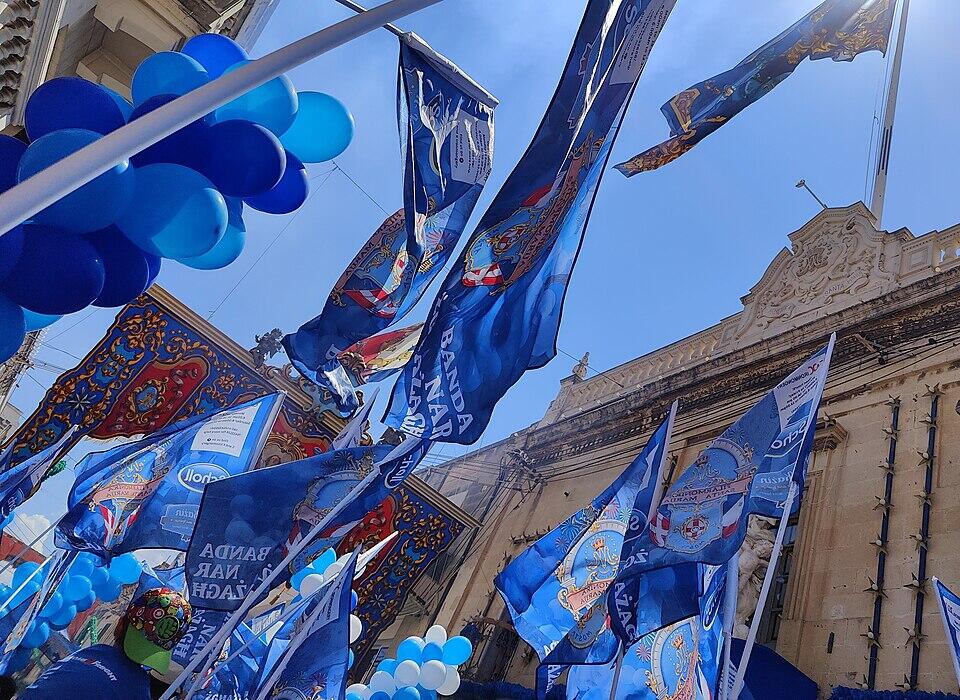
When it comes to the fireworks, where you stand makes all the difference. Here are some tips for getting the best view of both ground and aerial displays.
🎆 Ground Fireworks
- Position yourself in or near the pjazza
- Arrive early to secure a good spot
- Be aware of wind direction as smoke can drift
- Ground displays are close and intense
🚀 Aerial Fireworks
- Stand back for a better perspective
- Find an elevated position outside the village
- A rooftop or hill gives a panoramic view
- The further back the better the full picture
One thing that catches almost every first-time visitor off guard is the daytime petards, known in Maltese as kaxxa spanjola. These are extremely loud fireworks that produce no visual display. Their purpose is purely to announce key moments in the festa programme through sound. They can go off at any point throughout the day and are genuinely very loud. If you are attending with young children, bringing foam earplugs is a practical and sensible precaution. Noise-sensitive visitors may also want to position themselves further from the village centre during the day, where the sound is less intense.
To understand the different types of fireworks displays and what to expect from each one, our dedicated article on the Maltese fireworks tradition explains everything.
Festa Food: The Flavours of a Maltese Village Celebration
Food is an inseparable part of the Maltese festa experience, and the smells drifting from the street stalls are often the first thing you notice as you approach the village. Imqaret are deep-fried date pastries sold hot from the fryer and are perhaps the most iconic festa food of all. For many Maltese people they are inseparable from childhood memories of summer evenings and the distant sound of a band march.
🍬 Imqaret — deep-fried date pastries, crispy on the outside and sweet on the inside
🍭 Qubbajt — traditional Maltese nougat sold from wooden kiosks
🧆 Pastizzi — flaky pastry filled with ricotta or mushy peas
🌽 Ħobż biż-żejt — Maltese bread rubbed with tomato paste and drizzled with olive oil
🍩 Imqaret tat-tuffieh — apple pastries, a seasonal variation on the classic imqaret
Beyond the imqaret, a walk through the festa streets will take you past stalls selling qubbajt, the traditional Maltese nougat that has been a fixture of village celebrations for generations, and pastizzi, the flaky savoury pastries that are as Maltese as the festa itself. Ħobż biż-żejt, Maltese bread rubbed with tomato paste and drizzled with olive oil, is another staple worth seeking out. Most stalls are cash only, so make sure you have small notes and coins before you arrive3.
While you are trying the imqaret and qubbajt, chances are one of these marches will be echoing through the village streets nearby.
The Unwritten Rules of the Festa
The Maltese festa is an open celebration and visitors are genuinely welcome. A little awareness of how things work goes a long way towards making the experience more meaningful for everyone involved. The festa is first and foremost a religious occasion, and the community that organises it has dedicated months of effort to make it happen. Approaching it with curiosity and respect is all that is needed to be a welcome part of the celebration.
Despite the carnival atmosphere that surrounds them, festas remain fundamentally religious celebrations. At their core, they are expressions of devotion to the parish's patron saint.
Attard Baldacchino
⛪ Inside the Church2
- Cover shoulders and knees
- Remove any headwear
- Speak quietly out of respect
- Avoid photography during Mass
📸 At the Procession
- Avoid stepping into the route
- Do not block the path of the vara
- Photography is welcome along the route
- Stay back to allow the clergy to pass
🌙 Late at Night
- Be mindful of local residents
- Keep noise levels considerate
- The celebrations can go on until the early hours
- Enjoy the atmosphere but respect the neighbourhood
The more you understand about the tradition you are participating in, the more meaningful the experience becomes. Our complete complete Maltese festa guide covers everything you need to know about the history, the elements and the culture behind the celebration.
References
- "Gozo Ferry." Gozo Channel, 2026. Available at: https://www.gozochannel.com. Accessed 21 May 2026.
- "What to Wear When Exploring Churches in Malta." Artemis Learning, 2024. Available at: https://artemislearning.eu/student-resources/useful-info/what-to-wear-when-exploring-churches-in-malta/. Accessed 21 May 2026.
- "Maltese Culture, Customs and Etiquette." Another Travel, 2024. Available at: https://www.anothertravel.com/europe/malta/culture/. Accessed 21 May 2026.
Summarise with AI:
Did you like this article? Leave a rating!

 Loading...