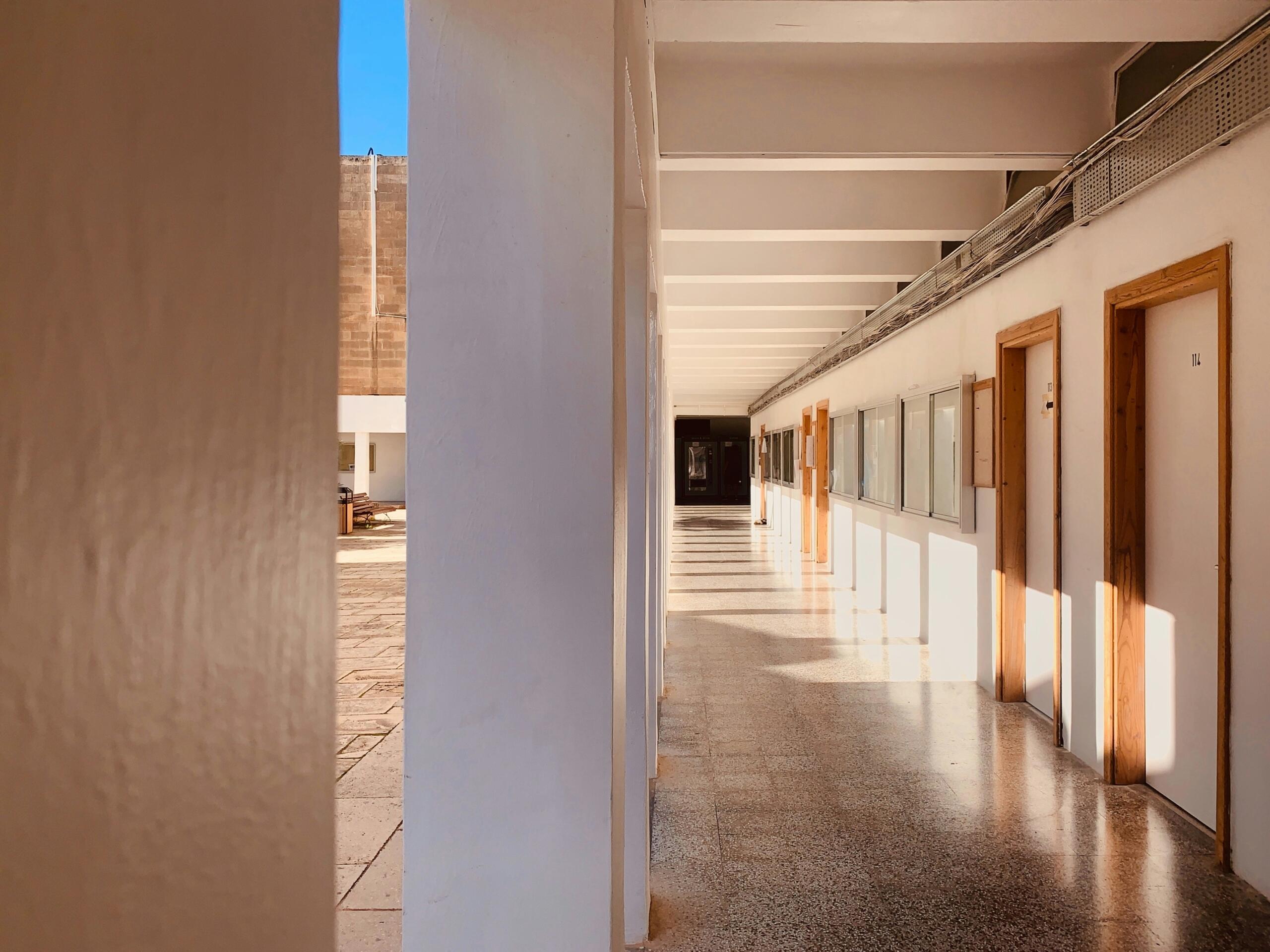

The University of Malta (UM) is the country's oldest and largest higher education institution, offering programmes from undergraduate level through to doctoral research. Founded in 1592, UM is based at its main campus in Msida and offers more than 200 undergraduate courses and study options across a wide range of disciplines.
This guide covers what you can study, how entry requirements work, what to expect from the application process and how fees are structured, whether you are a Maltese school-leaver, a postgraduate applicant or someone considering Malta from abroad.
💼 Business
Accountancy, economics, management, finance, tourism and MBA programmes.
🏥 Health
Medicine, dental surgery, pharmacy, nursing, physiotherapy and allied health sciences.
📚 Humanities
Arts, languages, theology, education, media and performing arts.
🔬 Science and Technology
Engineering, ICT, science, built environment and aerospace technologies.
🤝 Social Sciences
Law, social wellbeing, criminology, European studies and labour studies.
🌐 Find your course
The University's course finder at um.edu.mt lists all current programmes with entry requirements, fees and study modes.


What You Can Study at the University of Malta
The University of Malta organises its programmes across five main streams and 14 faculties, with specialist institutes and centres covering areas such as maritime law, aerospace technologies and creative thinking.¹ Each programme is pegged to the Malta Qualifications Framework (MQF), and teaching takes place across three campuses:
- 🏛️ Msida: main campus, full range of programmes
- 🏙️ Valletta Campus: selected programmes
- 🌿 Gozo Campus: selected programmes
- 🌐 Course finder: search all current programmes at um.edu.mt by subject, level, faculty and study mode
🎓 Undergraduate (MQF Level 6)
More than 200 undergraduate courses and study options, most full-time. Some programmes, particularly in the arts, allow students to combine two areas of study before specialising. Longer programmes such as Medicine and Dental Surgery include clinical placements built into the degree.¹
📖 Postgraduate (MQF Level 7)
Taught Master's degrees and Master's by research, across most faculties. Taught programmes follow a structured curriculum assessed through coursework and dissertations. Research programmes involve individually supervised thesis work. Many postgraduate programmes are available in the evening for working professionals.¹
🔬 Doctoral (MQF Level 8)
PhD and professional doctorates, coordinated through the Doctoral School. Research-based programmes accept applications throughout the year and require a research proposal as part of the application.²

General and Special Course Requirements
Entry requirements at the University of Malta operate on two levels: general requirements that apply to all undergraduate applicants, and Special Course Requirements that vary by programme. Meeting the general requirements does not guarantee entry to a specific course. You must also satisfy the Special Course Requirements for the programme you are applying to, which are published annually on the University's admissions pages.³
The standard general entry requirement is the Matriculation Certificate (MATSEC): six subjects including two at Advanced level, three at Intermediate level and Systems of Knowledge. Applicants must also hold Secondary Education Certificate (SEC) passes at Grade 5 or better in English Language, Maltese and Mathematics. Each course also has Special Course Requirements, so check these on the University's admissions pages at um.edu.mt.³
International Applicants and Alternative Routes
International applicants are assessed on comparable overseas qualifications. Those who do not fully meet standard requirements may be eligible for the Foundation Studies Course, which prepares international students for undergraduate entry at the University. English language proficiency via a Secure English Language Test (SELT) is required for applicants educated outside an English-speaking system. The specific test and minimum score required depends on the programme.³ For a full overview of how foreign qualifications are assessed in Malta, our guide for international students applying to Malta covers the recognition process in detail.
For some programmes, applicants who do not hold the standard qualifications may be able to apply through Recognition and Accreditation of Prior Learning (RPL), which can take relevant professional experience and prior learning into account. Availability and assessment procedures vary by programme and faculty.³
How to Compare and Choose Your Course
With more than 200 undergraduate courses and study options, narrowing down your options requires more than reading a course title. The University's course finder at um.edu.mt allows you to filter by subject, faculty, level and study mode, and each course page includes the full list of study units, entry requirements and applicable fees. Before applying, it is worth working through the following questions for each programme you are considering:
- Study mode: full-time, part-time or evening, which matters if you are working alongside your studies
- Modules and specialisations: two programmes with similar titles can have very different content, so read the study unit lists carefully
- Placements and practicals: some programmes in health, education and engineering include compulsory placements, so check whether these are arranged by the University or self-sourced
- Qualification type: a taught Master's and a Master's by research involve very different approaches to study, so make sure the type matches how you learn best
- Career and progression outcomes: some programmes lead directly to professional registration or licensing, so check what the qualification allows you to do after graduation, particularly for regulated professions such as medicine, law or architecture
University of Malta Courses for International Students
The University of Malta is open to international students at all levels of study. Teaching is conducted entirely in English, which makes it accessible to students from a wide range of countries without the need to learn a new language of instruction.¹ International students follow the same application process as local students, but some deadlines are earlier. Non-EU applicants who need a visa must apply well before the general deadline, and certain programmes, such as Medicine and Surgery, close as early as January for applicants with overseas qualifications.⁴
The University's International Office provides dedicated support for incoming international students, covering the application process, arrival in Malta and settling into campus life. The University also participates in Erasmus+ and other international exchange programmes, allowing students from partner institutions to spend a semester or full year studying in Malta.¹ For a broader overview of what to expect as a student coming to Malta from abroad, our guide to higher education in Malta covers the wider landscape.

How to Apply
Applications are submitted online through the admissions portal at um.edu.mt. The main intake is in October, with a smaller February intake available for some programmes. For most undergraduate courses, applications for the October intake open in November the previous year, giving applicants several months to prepare their documents and meet programme-specific requirements.⁴
Applications for the October intake open the previous November. Non-EU applicants who need a visa face an earlier cut-off, which for the October 2026 intake was 1 July. Some programmes, including Medicine and Surgery, close months earlier for overseas qualification holders. Research Master's and doctoral programmes accept applications throughout the year. Always check current dates on the University's Dates and Deadlines page before applying.⁴
Documents typically required at application stage:
- Certified copies of academic qualifications and transcripts
- Proof of identity
- Evidence of English language proficiency where required
- Personal statement, portfolio or research proposal for some programmes

Tuition Fees and Financial Support at the University of Malta
Fees at the University of Malta depend on your nationality, the programme you are studying and the level of your qualification. There is no single blanket fee. Each course page on um.edu.mt lists the applicable fees for both EU/EEA and non-EU/EEA students. Always check the current fee for your specific course before applying, as fees are set by law and can change between academic years.⁵
🇪🇺 EU/EEA and Swiss students
Undergraduate study is generally free, with minor enrolment or administrative fees only. Some postgraduate and specialised programmes carry fees even for EU students. Always confirm the fee for your specific course before applying.⁵
🌍 Non-EU/EEA students
Tuition fees apply and vary by programme and faculty. UK nationals are treated as non-EU for fee purposes since January 2021. Check the current fee on your chosen course page at um.edu.mt.⁵
- 💶 Government stipend: eligible Maltese students reading for a degree may qualify for the Students Maintenance Grant, administered through the University's Stipends Office and applied for annually through the Ministry for Education's portal⁶
- 🎓 UM scholarships for non-EU students: partial or full tuition fee waivers for Master's by Research and PhD applicants, awarded competitively after receiving unconditional admission to the programme. Professional doctorates and MBA programmes are not eligible⁷
- 🌍 Erasmus+ exchanges: UM students can apply to study abroad at partner universities through Erasmus+ and other international exchange programmes, with tuition fees waived at the host institution¹
For a full breakdown of living and study costs in Malta, including accommodation, transport and everyday expenses, our guide to the cost of studying in Malta covers what to budget for beyond tuition.
Campus and Student Life
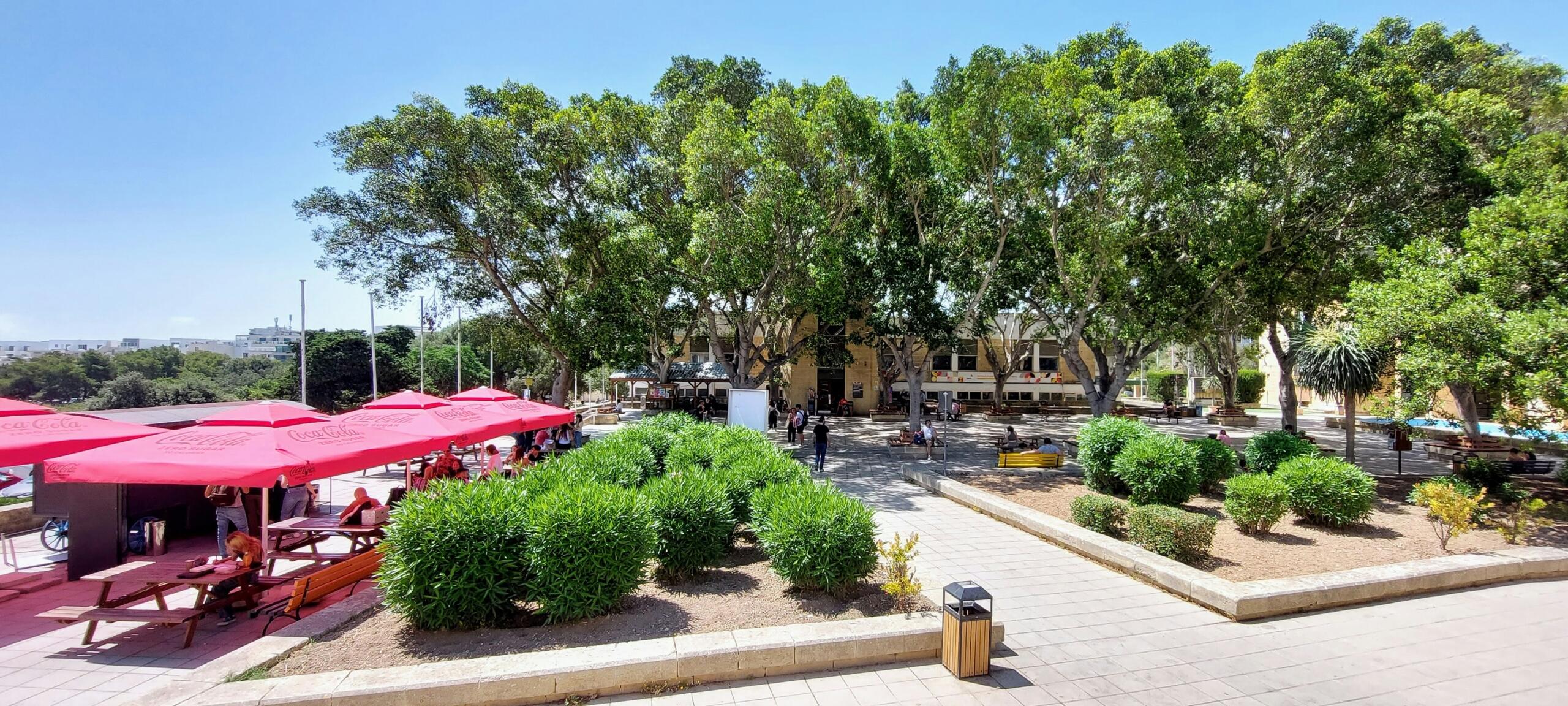
The University of Malta's main campus is in Msida, close to the centre of the island and well connected by public transport. The campus is compact and urban, with teaching buildings, a digital and physical library, sports facilities including a gym and swimming pool, and a range of food and retail outlets within or close to the site. Campus Hub accommodation is available adjacent to the campus, offering single and twin room options with shared facilities.⁸
Student support at the University covers a broad range of needs, from academic guidance to health and wellbeing:
If you are weighing up vocational and applied routes alongside a traditional university degree, our guide to MCAST courses and qualifications provides a useful comparison of what Malta's vocational college offers at a similar level.
Making Your Choice
The University of Malta suits students looking for a traditional academic degree in a small, English-speaking European country. It offers a broad range of disciplines, while its qualifications are aligned with the wider European qualifications framework, making their level easier to understand and compare across Europe
The key is to check the entry requirements and fees for your specific course rather than relying on general figures, use the University's course finder to compare programmes in detail, and confirm current deadlines well before you plan to apply. Taking the time to research thoroughly at this stage avoids surprises later and puts you in the strongest position when submitting your application.
References
- University of Malta. "Study." um.edu.mt, https://www.um.edu.mt/study/. Accessed 24 Sept. 2026.
- University of Malta. "Apply for Your Doctoral Studies." um.edu.mt, https://www.um.edu.mt/doctoralschool/applyforyourdoctoralstudies/. Accessed 24 Sept. 2026.
- University of Malta. "Admissions FAQs." um.edu.mt, https://www.um.edu.mt/study/admissionsadvice/admissionsfaqs/. Accessed 24 Sept. 2026.
- University of Malta. "Dates and Deadlines." um.edu.mt, https://www.um.edu.mt/study/datesdeadlines/. Accessed 24 Sept. 2026.
- University of Malta. "Fees and Funding." um.edu.mt, https://www.um.edu.mt/study/feesfunding/. Accessed 24 Sept. 2026.
- University of Malta. "Maintenance Grants." um.edu.mt, https://www.um.edu.mt/registrar/stipends/grants/. Accessed 24 Sept. 2026.
- University of Malta. "Scholarships for International Students." um.edu.mt, https://www.um.edu.mt/international/students/scholarships/. Accessed 24 Sept. 2026.
- University of Malta. "Your Guide to University Life: Student Handbook 2025/26." um.edu.mt, https://www.um.edu.mt/media/um/docs/directorates/registrar/helphub/R4119-YourGuidetoUniversityLife_Digital.pdf. Accessed 24 Sept. 2026.
Summarise with AI:
Did you like this article? Leave a rating!

 Loading...