

Malta has a small but well-structured higher education system that offers routes from vocational training all the way to doctoral research. Whether you are a Maltese student deciding where to go after secondary school, or someone considering Malta as a place to study, understanding how the system is organised is the best place to start.
Key Takeaways
- Malta's higher education system is regulated by the Malta Further and Higher Education Authority (MFHEA), which licenses providers, accredits programmes and recognises qualifications.¹
- Qualifications in Malta are placed on the Malta Qualifications Framework (MQF), an eight-level system aligned with the European Qualifications Framework (EQF).²
- The University of Malta, MCAST and ITS are Malta's three main publicly funded higher education institutions, all holding self-accrediting status.³
- A growing number of licensed private providers operate in Malta, offering programmes across business, IT, health and other fields.⁴
- The MQF's alignment with the EQF means Maltese qualifications can be compared with those from other EU member states, though academic recognition is not automatic and must be sought from the relevant institution or authority.²
- Approximately 22,000 students were enrolled in higher education in Malta in the 2023/24 academic year.⁵


How Higher Education in Malta Is Organised
Higher education in Malta is governed by the Malta Further and Higher Education Authority (MFHEA). The MFHEA is responsible for licensing higher education providers, accrediting programmes, quality assurance and the recognition of qualifications.¹ It also manages the Malta Qualifications Framework, which is the national reference system for all qualifications awarded in Malta.

The system includes both public and private providers. On the public side, the University of Malta, MCAST and ITS are the principal institutions, each with self-accrediting status within specific limits granted by the MFHEA.³
The MFHEA licenses higher education providers, accredits programmes, assures quality and recognises qualifications — both local and foreign. It also manages the Malta Qualifications Framework and operates the MQRIC centre for recognition of qualifications obtained abroad.¹
The Malta Qualifications Framework
The Malta Qualifications Framework (MQF) is the national system for classifying qualifications according to learning outcomes. It has eight levels, from basic education at Level 1 through to doctoral study at Level 8. Each level is defined by what a learner knows, understands and can do, not simply by the name of the qualification or the number of years studied.²
The MQF is fully aligned with the European Qualifications Framework (EQF), which means that qualifications awarded in Malta can be understood and compared within the wider European education landscape, though formal academic recognition remains a separate process and must be requested from the receiving institution or authority. For regulated professions such as medicine, law or architecture, academic recognition through the MQF is separate from professional recognition, which requires approval from the relevant professional body.²
MQF Levels for Higher Education
For those considering higher education in Malta, the relevant levels are 4 through 8. Here is what each level generally represents:
| MQF Level | Qualification Type | Example |
|---|---|---|
| Level 4 | Advanced secondary / pre-higher education | Matriculation Certificate (MATSEC), advanced diplomas |
| Level 5 | Short-cycle higher education | Higher National Diploma, undergraduate diploma |
| Level 6 | Bachelor's degree level | Bachelor of Arts, Bachelor of Science, Bachelor of Laws |
| Level 7 | Master's degree level | Master of Arts, Master of Science, postgraduate diploma |
| Level 8 | Doctoral level | PhD, professional doctorate |
Level 4 is worth highlighting because it is the main gateway into higher education for many Maltese students. The Matriculation Certificate, awarded by the MATSEC Examinations Board, sits at MQF Level 4 and is the standard entry requirement for degree programmes at the University of Malta.² Students without a Matriculation Certificate may be able to qualify through other routes, including mature student entry or relevant professional experience, depending on the institution and course.
Main Higher Education Institutions in Malta
Malta has a range of public and private higher education institutions. The right choice depends on the course, qualification level, learning style, budget and career goals.
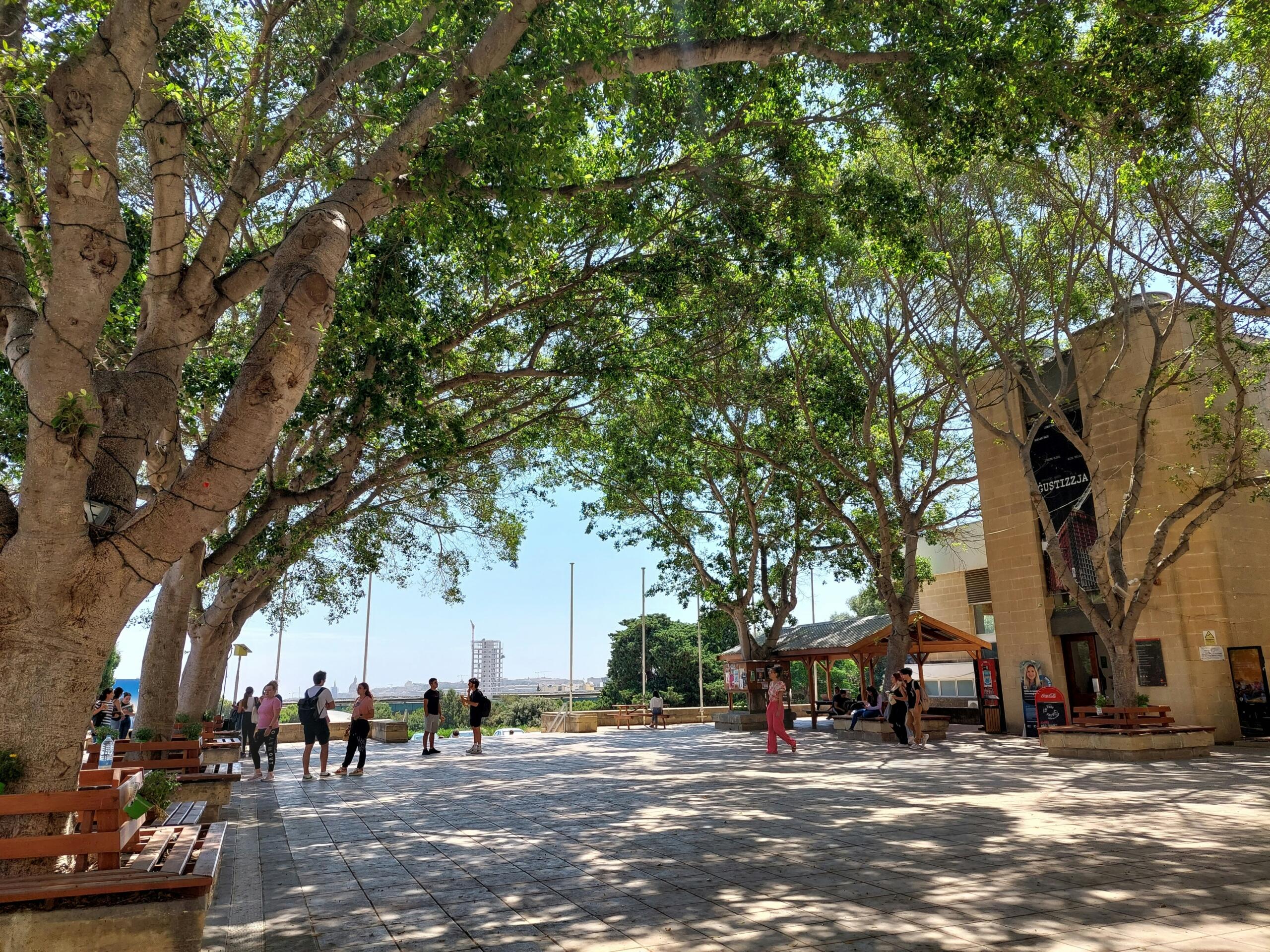
University of Malta
The University of Malta, located in Msida, is Malta's oldest and largest higher education institution. It was originally founded as a Jesuit college in 1592, became a state institution in 1769, and was significantly restructured in 1988.³ Today it offers programmes across most academic disciplines, from arts and humanities to law, medicine, engineering, and the sciences, primarily at MQF Levels 6, 7 and 8. For a detailed look at its courses, entry requirements and fees, our guide to studying at the University of Malta covers everything you need to know.
MCAST
The Malta College of Arts, Science and Technology (MCAST), based in Paola, is Malta's leading vocational and technical education institution. It offers programmes from MQF Level 1 through to Level 8, across fields including engineering, business, IT, health sciences, creative arts and hospitality.⁵ MCAST is a major provider and holds self-accrediting status for its programmes.
Institute of Tourism Studies
The Institute of Tourism Studies (ITS), founded in 1987, is Malta's specialist public institution for hospitality, tourism and culinary arts. It offers programmes from MQF Level 2 through to Level 7 and holds self-accrediting status within its area of specialisation.³ ITS is a practical, industry-focused institution with strong ties to Malta's tourism sector, which remains one of the island's most significant economic drivers. Graduates enter a sector that is central to the Maltese economy, though career outcomes depend on the programme, level and individual circumstances.
Private Licensed Providers
A growing number of private higher education providers operate in Malta, many of which have expanded significantly since the early 2000s. These include institutions offering programmes in business, law, IT, health sciences, creative media and more. Some are affiliated with or accredited by international universities, while others offer programmes accredited directly by the MFHEA.⁴
(1) Is the institution licensed by the MFHEA?
(2) Is the specific programme accredited and pegged to the MQF?
(3) What MQF level does the qualification sit at?
(4) Is the qualification recognised for the career or further study path you have in mind?
The MFHEA website at mfhea.mt publishes its register of licensed providers and accredited programmes.¹
Accreditation and Recognition of Qualifications
Understanding the difference between a licensed provider, an accredited programme and professional recognition is important before making any decision about where to study.
- Licensed provider: an institution that has been approved by the MFHEA to operate as a higher education provider in Malta. Licensing relates to the institution, not to individual programmes.
- Accredited programme: a specific course that has been assessed by the MFHEA, pegged to the MQF at a specific level and approved for delivery. A provider can be licensed without all of its programmes being individually accredited.
- Professional recognition: separate from academic accreditation. Even if a qualification is accredited at MQF Level 6 or above, it does not automatically qualify the holder to practise a regulated profession. Doctors, lawyers, architects and other regulated professionals must obtain separate recognition from the relevant professional body.²
The MFHEA operates the Malta Qualifications Recognition Information Centre (MQRIC), which assesses foreign qualifications for Maltese purposes and can provide guidance on the recognition of Maltese qualifications abroad.¹
Popular Subjects and Types of Courses
Malta's higher education sector covers a wide range of subjects, though certain fields are particularly well represented given the structure of the local economy.
🏥 Health and Medicine
The University of Malta has a long-established medical school. Allied health programmes are available across multiple institutions.
⚖️ Law
Malta's legal system combines civil and common law traditions, and the University of Malta offers recognised law degrees at undergraduate and postgraduate level.
💼 Business and Finance
Widely available across public and private providers, from certificate level through to MBA programmes.
💻 IT and Gaming Technology
Malta's iGaming industry has made it a significant hub for technology and digital skills.
🏨 Hospitality and Tourism
ITS is the specialist provider in this area, with programmes closely connected to Malta's significant tourism and hospitality sector.
🎨 Creative Arts and Media
Available at MCAST and several private providers. Game design, digital media and graphic design are among the more specialised options available in Malta.

Entry Requirements and the Application Process
Entry requirements in Malta vary by institution, programme and level. For most undergraduate degree programmes at the University of Malta, applicants must satisfy the University's General Entry Requirements. These normally include the Matriculation Certificate (MQF Level 4), comprising:⁶
- 📝 A Systems of Knowledge paper
- 📚 Two subjects at Advanced level
- 📖 Three subjects at Intermediate level
Applicants must also normally hold SEC passes at Grade 5 or better in English Language, Maltese and Mathematics. Individual programmes may have additional Special Course Requirements.
MCAST programmes generally have more flexible entry pathways, particularly at the lower MQF levels. Entry at Level 5 and above typically requires some form of prior qualification or relevant experience. Private providers set their own entry requirements within MFHEA guidelines.
Applications to the University of Malta are made through the University's own online admissions portal. MCAST has a separate application process, as do private providers. For students coming from outside Malta, entry requirements and application procedures are covered in more detail in our guide for international students applying to Malta.
Tuition Fees and Study Costs
Tuition fees in Malta vary significantly depending on the institution, the programme and the student's residency status. Maltese and EU students at the University of Malta and MCAST pay subsidised fees set by the government, which are considerably lower than fees at comparable institutions in the UK, Ireland or other EU countries. Non-EU international students generally pay higher fees, though costs remain competitive by European standards.
Private providers set their own fee structures, which can vary widely. Programmes at private institutions are typically more expensive than equivalent public sector courses, but costs depend heavily on the institution and the level of the programme.
How to Choose the Right Institution and Course
Choosing where to study in Malta is not a question of finding the single best institution. It is a question of finding the best fit for what you want to achieve. For a full overview of what Malta's vocational college offers across levels and subject areas, see our guide to MCAST courses and qualifications.
Here are the key factors worth considering:
- Qualification level and type: Are you looking for a vocational qualification, an undergraduate degree or a postgraduate programme? The answer will immediately narrow down which institutions are relevant.
- Subject area: Not all subjects are available at all institutions. Check what is actually offered in your area of interest before comparing institutions.
- Accreditation: For any institution you are considering, verify with the MFHEA that the provider is licensed and the specific programme is accredited. For regulated professions, also check professional body recognition.
- Career goals: Some careers require qualifications from specific institutions or at specific MQF levels. Research what employers or professional bodies in your field expect before committing to a course.
- Cost: Public institutions generally offer subsidised fees for Maltese and EU students. Private providers may have more flexible entry but higher costs. Factor in living costs alongside tuition.
Making the Most of Higher Education in Malta
Malta's higher education system is compact but genuinely diverse. The combination of a long-established public university, a well-regarded vocational college, a specialist tourism institute and a growing private sector gives students a meaningful range of options across most levels and subject areas. The system's alignment with European standards means that qualifications obtained in Malta are generally well understood across the EU, which matters for students who may want to work or study elsewhere after graduating. For a full breakdown of what studying here costs, including tuition, accommodation and everyday expenses, see our guide to the cost of studying in Malta.

The most important step is to research carefully before applying. Check accreditation, understand what MQF level your intended qualification sits at, and make sure the programme you are considering genuinely leads to the outcome you are aiming for, whether that is a first job, a professional licence or further postgraduate study.
References
- Malta Further and Higher Education Authority. "About MFHEA." mfhea.mt, https://mfhea.mt/about/. Accessed 11 Sept. 2026.
- Malta Further and Higher Education Authority. "Malta Qualifications Framework." mfhea.mt, https://mfhea.mt/mqf/. Accessed 11 Sept. 2026.
- European Commission — Eurydice. "Higher Education — Malta." eurydice.eacea.ec.europa.eu, https://eurydice.eacea.ec.europa.eu/eurypedia/malta/higher-education. Accessed 11 Sept. 2026.
- Malta Further and Higher Education Authority. "Licensed Providers." mfhea.mt, https://mfhea.mt/licensed-providers/. Accessed 11 Sept. 2026.
- National Statistics Office Malta. "Students in Post-secondary and Tertiary Education: 2023–2024." nso.gov.mt, https://nso.gov.mt/students-in-post-secondary-and-tertiary-education-2023-2024/. Accessed 11 Sept. 2026.
- University of Malta. "Admissions: Entry Requirements." um.edu.mt, https://www.um.edu.mt/admissions/undergraduate/entryrequirements/. Accessed 11 Sept. 2026.
Summarise with AI:
Did you like this article? Leave a rating!

 Loading...