
Would you like to improve your dancing and become the king or queen of the dance floor?
Don’t worry if not. If any of the following statements sound like you, then you should definitely read this article:
Put aside your preconceptions about dancing and your fears of getting up on the dance floor. Like many people in Malta and Gozo, even if you’re an absolute beginner, you can start learning how to dance today.
If you are comparing styles, lesson formats and beginner options, a dancing lessons guide can help you decide what kind of class to try first.
Here are 15 great reasons to learn to dance, whether you want to feel healthier, become more confident, meet new people or finally stop worrying about having two left feet.


1. Dancing Is Enjoyable
Dancing is first and foremost a leisure activity. If you want to learn how to dance, it’s probably because you want to have fun and learn some new dance moves.
It doesn’t matter whether you’re learning the cha cha, bachata, rock ‘n’ roll, Cuban or Puerto Rican salsa, merengue, Viennese waltz, Zumba, or mambo, let the music take you away from your everyday worries. Bit by bit, you’ll stop worrying and start enjoying yourself. All types of dance classes are a great way to unwind.
2. Get Rid of Stress with Dancing
Like all physical activity, dancing lessons are a great way to get rid of stress!
It encourages the release of endorphins, the hormones of happiness. Dancing can be great for your well-being. You can’t hide it. Even if you’re an absolute beginner, you can still enjoy the benefits of dancing from your very first class.
If you're stressed about your wedding, you can even get wedding dance lessons. This is great if you and your partner want to learn a few moves before your first dance on the big day.
Dance is the hidden language of the soul
Martha Graham
3. Stay in Shape with Dancing
Dancing is both an art form and a sport. Whether you attend a dance workshop or private lessons, you can improve your physique by dancing. You can tone your muscles and increase your endurance. While your first few lessons may result in a few aches and pains the following day, with regular practise, these will just be a distant memory.
A dance lesson can be as rigorous as going for a run; it’s an intense cardio workout. If you need something more intense than a line dance class, for example, you can always go to dance fitness classes.
4. Improve Your Posture and Body Awareness
Are you familiar with the way dancers carry themselves?
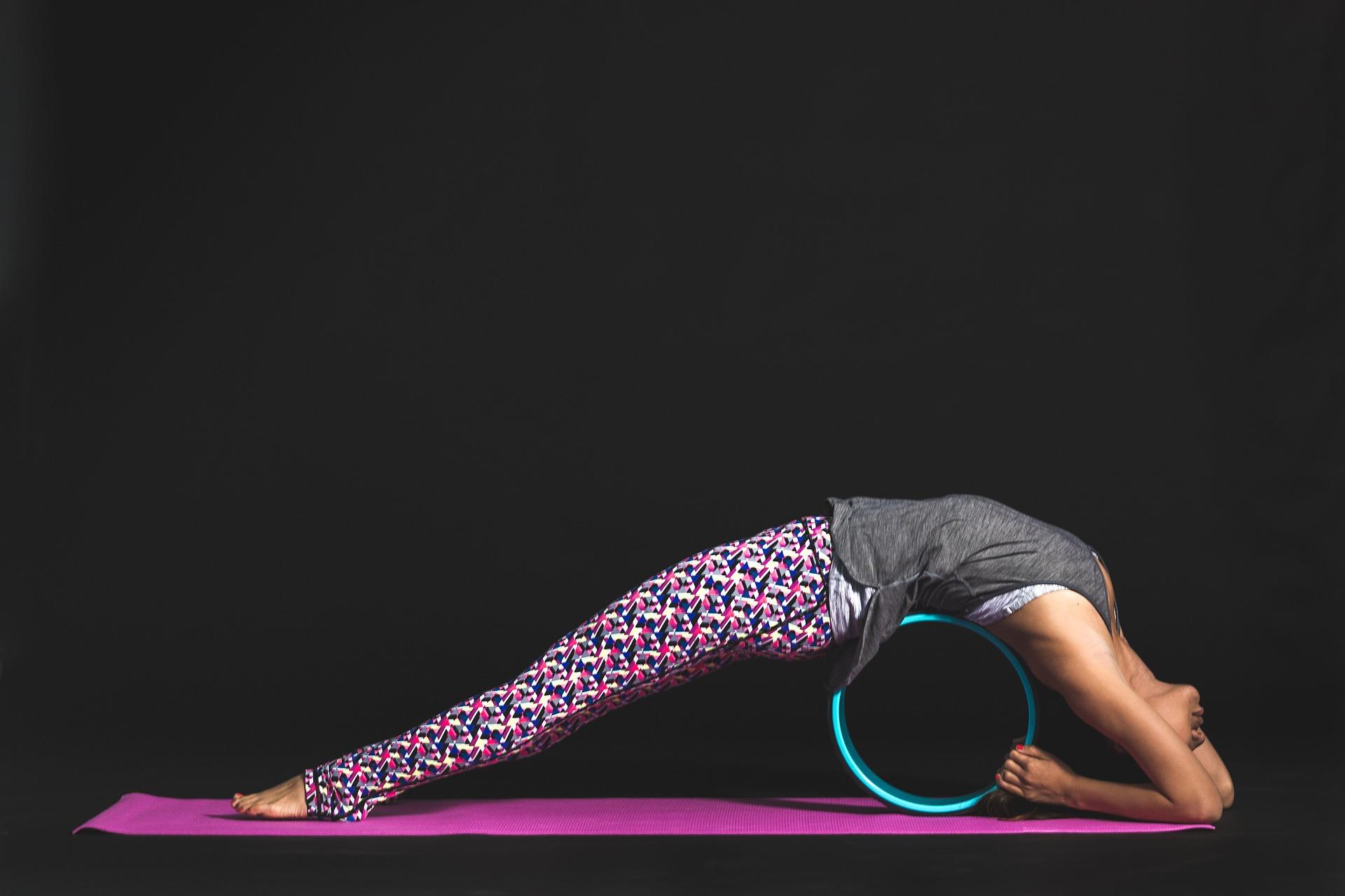
Dancers often develop strong posture because they learn how to stand tall, control their movements and use their bodies with more awareness. Over time, dance can help you feel more balanced, more coordinated and more confident in the way you move.
Dance can also support strength and flexibility. Different styles work different parts of the body, from core control in ballet and contemporary dance to stamina and rhythm in salsa, hip hop or dance fitness.
You can also learn to dance in the comfort of your own home.
5. Become More Flexible by Dancing
Dancing works almost every joint.
You’ll also do stretches to warm up your muscles. These movements can help you improve your flexibility. While you won’t be able to do the splits or be an expert breakdancer after just one lesson, you’ll become more limber over time.
Ballet is one of the best ways to get more flexible.
6. Dance to Find Love
Whether you’re a man or a woman, who doesn’t love a good dancer?
Think of any busy dance floor at a wedding, party or social night. The people who look most confident are not always the most technically perfect dancers, but the ones who seem relaxed, playful and comfortable with the music.
Ever wonder why so many people remember what they were listening to when they met?
If you're confident when you dance and you're having fun, you'll find it much easier to introduce yourself to new people.
Dance can help beginners become more comfortable being seen, making mistakes and trying again. That confidence often carries into social situations outside class too.
7. Meet New People by Dancing
Just like when it comes to finding love, you can also make friends by dancing.
This doesn’t necessarily have to take place in nightclubs. Dance classes or workshops give you an opportunity to dance with different partners in a friendly atmosphere. You’ll quickly get to know people through a shared interest: your passion for dancing.
A lot of dance styles, like ballroom dancing, the foxtrot, and ballet, for example, require you to have a partner. Once the lesson’s over, you and your class could always go for a drink, a coffee, or some food.
8. Dance to Spice Up Your Relationship
A lot of couples get dance classes for the first dance at their wedding. Why should your dance classes end once you’re married? Practising dance is a great thing to do as a couple.
In fact, private dance lessons can make you and your partner more synchronised. Not to mention the fact that dancing is a great way to get closer to your partner. It’s a great way to reignite the passion in your relationship.
Whether it’s ballroom dancing, Latin dance, tango, or whatever, you should choose a fiery dance style that works for you.
Why not try a bit of rumba, cha cha or hip hop dancing?
9. Gain Self-Confidence with Dancing
Are you shy? Introverted? Do you have trouble in groups or just lack a bit of self-confidence?
Getting dance instruction is a great way to improve your self-esteem while doing something creative and fun. The more you improve, the more confidence you’ll get. There’s nothing better than achieving your goals and then feeling capable of climbing mountains!
Once you’ve learned about dance and got a bit of confidence, you’ll see it start to positively impact other aspects of your daily life. If you start going to shows and dance competitions, you’ll also be able to show off this new confidence to spectators and do more than you ever thought was possible.
If you dream of learning to dance but you're worried about the affordability of lessons, there are plenty of ways you can learn to dance for free!
10. Disconnect with Dancing
How many hours a day do you spend in front of screens, either watching TV or scrolling on your mobile phone? Wouldn’t it be nice to be able to disconnect from all that, even if just for an hour a week while you learn to dance?
You can leave your other worries behind by learning how to dance at your own pace with a dance teacher. The second you start learning how to dance, you’ll forget about everything else. Even if your tutor's not around, you can always put on dance videos on YouTube to learn new dance moves.
11. Stay Young by Dancing
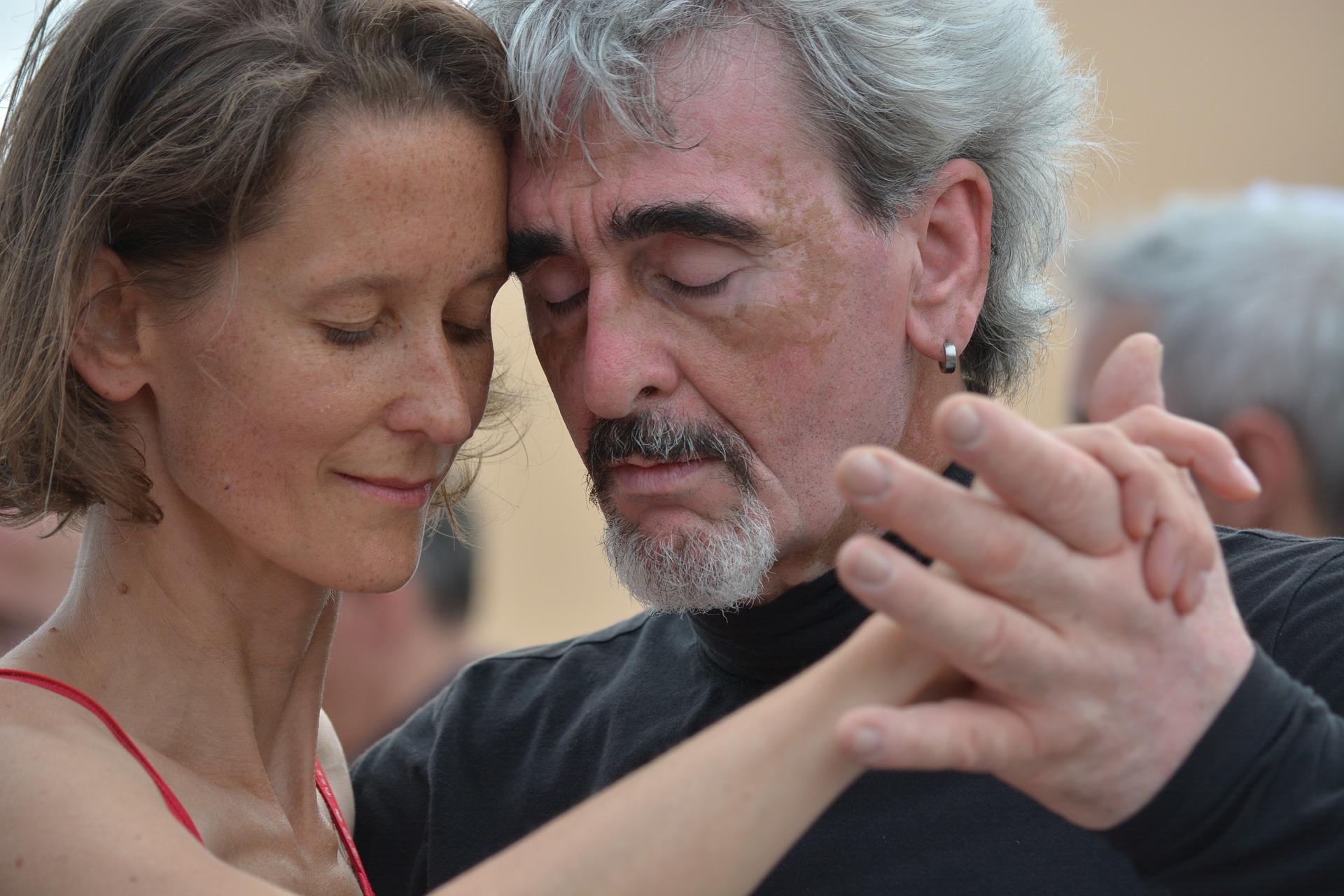
There are plenty of physical benefits to dancing lessons. Numerous scientific studies have also shown the benefits dancing can have on the brain. The results may surprise you:
- Dancing has been associated with a lower risk of dementia in older adults.1
- Dance, including tango-based movement, has been studied for its benefits in people with Parkinson’s disease.2
- Dance training has also been linked to reduced anxiety.3
12. Communicate with Dancing
Body language is universal.
Dancing is a way to communicate with your body and externalise and express your emotions. You’ll see this if you attend any dance shows; dancers make gestures and movements that convey messages and emotions and the show will tell a story.
Don’t fancy becoming a professional dancer?
That doesn’t matter. Dance is an art form that allows anyone to express themselves in the same way that painting or music can. When you travel, you can always dance or use gestures if you don’t speak the language.
13. Improve Your Memory by Learning a Routine
Learning dance steps, some choreography, coordinating your movements, etc. This all requires a lot of concentration and memory.
Getting involved in dancing is therefore a great way to stimulate your memory and improve it. Over time you’ll find learning routines easier and easier and it’ll all soon become second nature to you.
14. Stimulate Your Creativity with Dancing
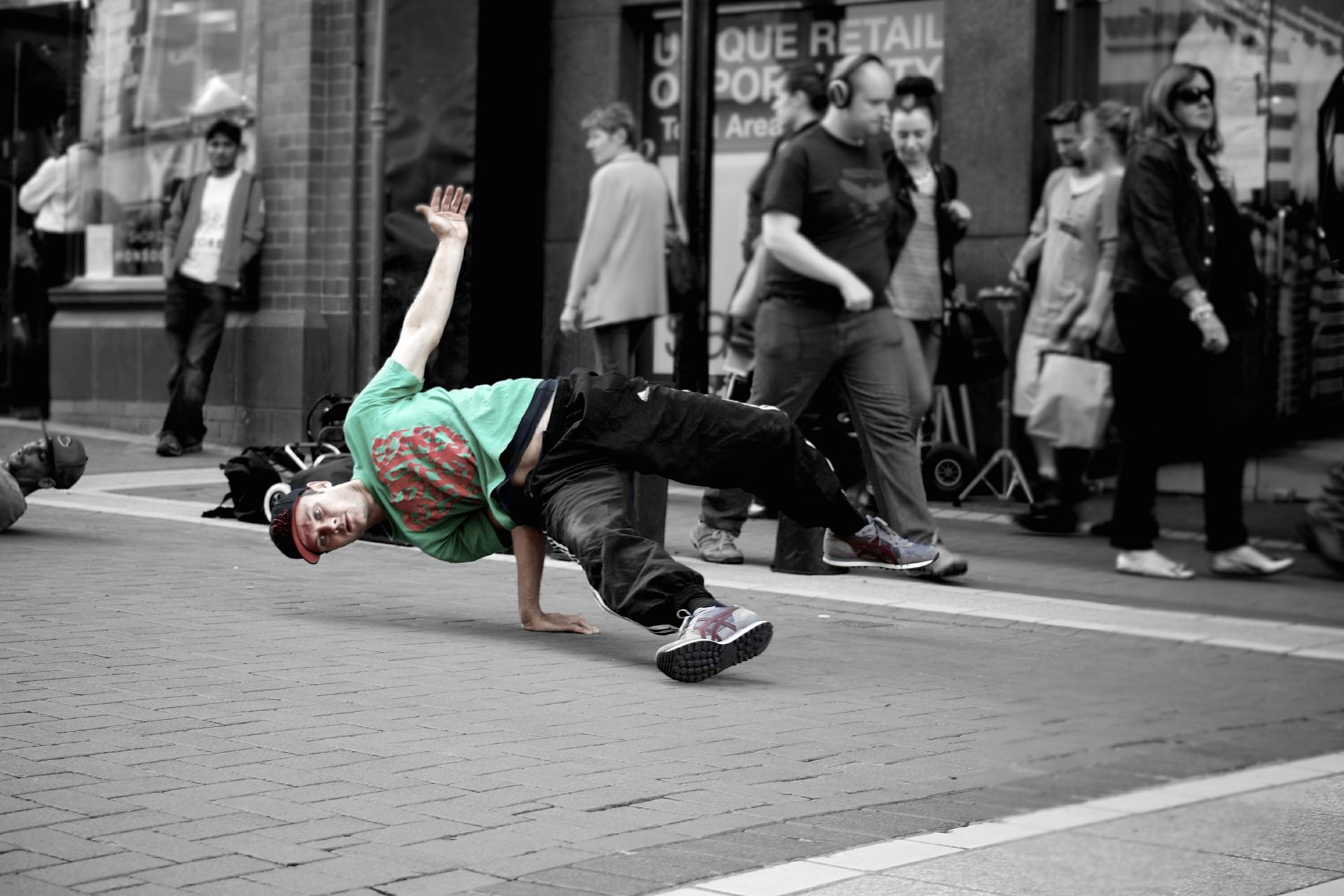
Just like all other art forms, dancing is a way to be creative.
There’s no doubt that after a few lessons you’ll want to improvise and create your own choreography rather than doing the steps you’ve been taught. As an amateur dancer, you’ll soon become a choreographer and an expert in improvisation. Next you’ll be impressing your friends with your moves on a night out.
15. Learn to Dance Professionally
Is dancing your true calling? For anyone still asking why learn dancing beyond fitness or fun, professional training can also open the door to performance, choreography, teaching and creative work.
You can get paid to work in dance, but professional paths vary. Some dancers focus on performance, while others move into choreography, teaching, workshops or wider creative projects.
Whatever experience you have, you can start learning how to dance at any age. There are classes for kids, teens, and adults, beginners, intermediates, and experts, or intensive courses, private lessons, and group classes.
If you want to learn to dance casually or need to improve a lot in a short amount of time, have a look at some of our private tutors and find the right person to teach you how to dance today.
It doesn’t matter whether you’re looking for rock ’n’ roll dancing, tango, salsa, flamenco, line dancing, tap or hip hop. There are plenty of different styles of dance to choose from, and one of the best reasons to learn to dance is that you can start at almost any age.
So, how much can you expect to pay for your dance tuition? You can also compare dance lesson prices before choosing the format that suits your budget.
📊 Poll: What social benefit of dancing appeals to you most?
References
- Verghese, Joe, et al. “Leisure Activities and the Risk of Dementia in the Elderly.” The New England Journal of Medicine, vol. 348, no. 25, 2003, pp. 2508–2516, https://www.nejm.org/doi/full/10.1056/NEJMoa022252. Accessed 25 June 2026.
- Duncan, Ryan P., and Gammon M. Earhart. “Randomized Controlled Trial of Community-Based Dancing to Modify Disease Progression in Parkinson Disease.” Neurorehabilitation and Neural Repair, vol. 26, no. 2, 2012, pp. 132–143, https://pubmed.ncbi.nlm.nih.gov/21959675/. Accessed 25 June 2026.
- Lesté, André, and John Rust. “Effects of Dance on Anxiety.” Perceptual and Motor Skills, vol. 58, no. 3, 1984, pp. 767–772, https://pubmed.ncbi.nlm.nih.gov/6473025/. Accessed 25 June 2026.
Summarise with AI:
Did you like this article? Leave a rating!

 Loading...