

A different language is a different vision of life.
Federico Fellini
Many people in Malta can understand at least some Italian, and that is closely linked to the islands’ history, location and long cultural relationship with Italy. Malta lies just south of Sicily, and for centuries it was shaped by political, educational and cultural links with the Italian world. Even today, Italian remains familiar to many residents.
According to Malta’s National Statistics Office, 62% of people in the country reported at least basic knowledge of Italian in the Malta Skills Survey1. That helps explain why the Italian language in Malta still feels present in everyday life, even though Maltese and English are the country’s official languages.


Speaking Italian in Malta: Historical Background
The story begins long before modern Malta. Because of the islands’ position in the central Mediterranean, Malta was tied for centuries to Sicily and southern Italy through trade, religion and administration. These links influenced Maltese culture and language over a very long period. Maltese itself developed from a dialect of Arabic, but it absorbed strong Sicilian and Italian influence over time, especially in vocabulary linked to culture, law, religion and public life.
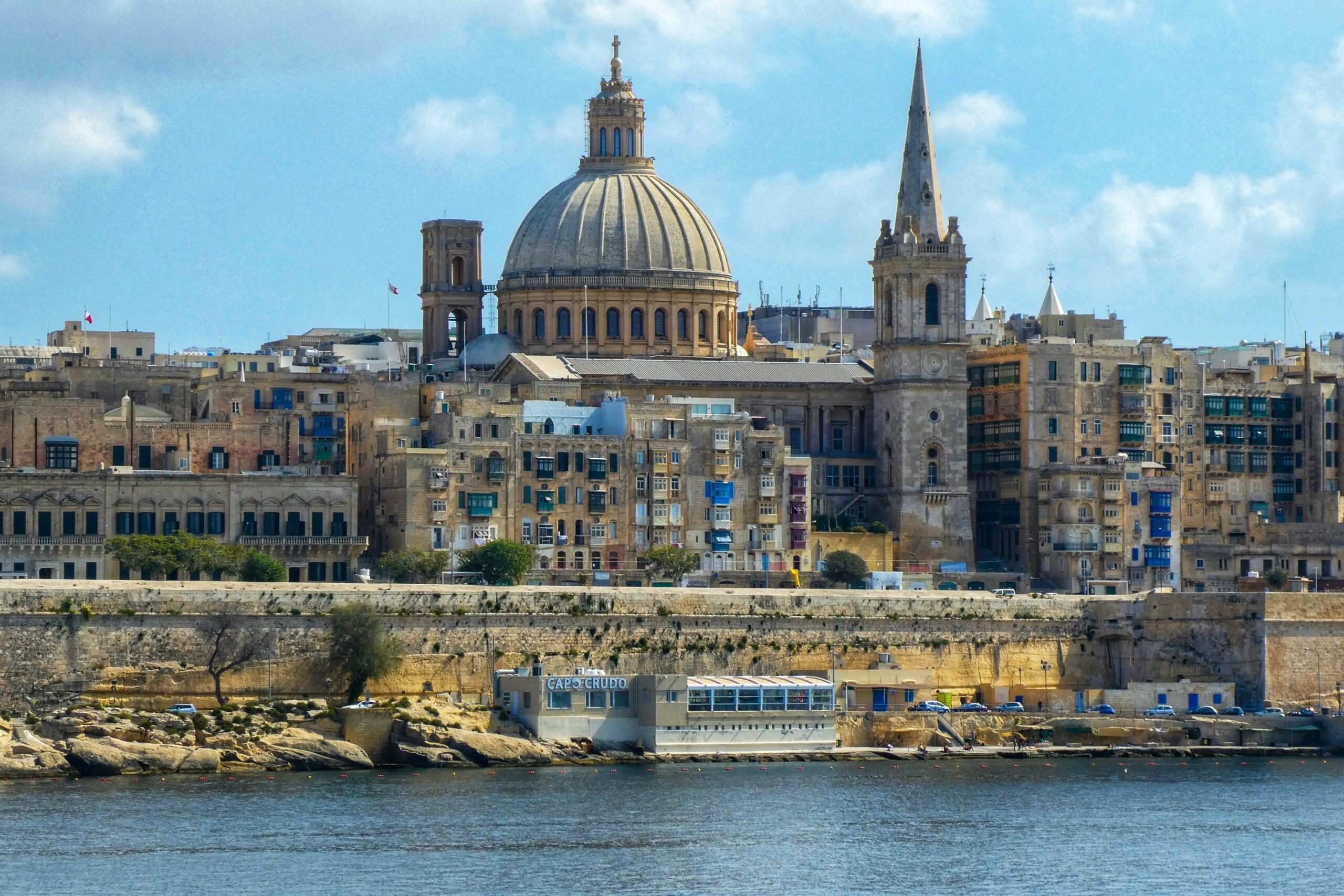
Italian became especially important during the period of the Knights of St John, who ruled Malta from 1530 to 1798. University of Malta research notes that the Knights adopted the Tuscan variant of Italian as the language of administration2.
That decision gave Italian a central role not only in official communication, but also in the intellectual and cultural life of the islands. Literary production, artistic exchange and educational life all became closely tied to Italian during this period.
Over time, Italian was used widely in Malta as a language of administration, culture and education. Italian was for a long period the language of the law courts, the curia, journalism and much of the educated class. Until 1880, Italian was the language of education from primary school to university where people learned and improved their Italian language skills in Malta. That is a major reason why Italian became so deeply rooted in Maltese society. It was not simply a foreign language that people encountered occasionally. It was one of the main languages through which public life functioned.
This changed during British rule. As English became more important in administration and education, Italian gradually lost its official role. Malta’s language question became part of a broader cultural debate, with Maltese, Italian and English each linked to different aspects of identity. English was promoted for governance and modernisation, while Maltese gained importance as a national language. Italian, long associated with education and elite culture, began to decline in institutional use.
By the early twentieth century, this shift became more defined. Italian was removed from administration and formal education, and English replaced it as the dominant language in public life. However, this did not mean Italian disappeared. By that point, it had already been embedded for centuries in literature, education and everyday vocabulary.
At the same time, Malta’s proximity to Italy ensured that cultural exchange continued. Italian media, especially television, brought the language back into daily life in a more informal way. As a result, even without an official role, Italian remained familiar and widely understood across Maltese society.
Italian remained important in Malta long after its official influence weakened, because its roots were already embedded in education, culture and daily communication.
Cultural Influence of Italy in Malta
History explains why Italian first became influential, but culture explains why it remained so familiar. One of the strongest reasons is Malta’s closeness to Sicily. Italy has never felt very far away from Malta, either geographically or culturally. This proximity helped maintain strong links in food, family life, religion, entertainment and travel. Italian culture often felt close and recognisable rather than distant.
A major modern factor was television. Italian broadcasts from Sicily reached Malta in the twentieth century and became extremely popular. This gave Maltese households regular exposure to spoken Italian through news, drama, films, music and sport. Unlike classroom learning, this kind of contact happened naturally at home and over many years. For many Maltese, Italian became understandable because they heard it constantly, not only because they formally studied it.
Italian music and cinema also helped keep the language visible. Malta’s cultural closeness to southern Italy meant that Italian media often felt easier to connect with than content from more distant countries. Tourism reinforced this as well.

Travel between Malta and Italy is common, and the relationship works both ways: Italy is a nearby destination for Maltese residents, while Italian visitors are also regular visitors of Malta, Gozo and Comino. That ongoing contact helps keep the language relevant in practical and cultural terms.
Another important point is that Italian does not feel entirely unfamiliar to many Maltese speakers. Maltese is a Semitic language, but it contains many words influenced by Sicilian and Italian. Because of that, Italian may feel more approachable than a language with no historical connection to Malta at all. That sense of familiarity helps explain why people in Malta often understand at least some Italian, even if they are not fully fluent.
Learning Italian in Malta Today
The place of Italian in modern Malta is not only cultural. It is also educational. Learning Italian in Malta remains relevant because Italian is still offered as a subject in the Maltese school and examination system. The MATSEC SEC syllabus for Italian confirms that students can take Italian as part of their secondary education, with assessment in reading, writing, listening and speaking.

This matters because it means Italian is still treated as a serious academic subject rather than only an informal extra. Students who choose Italian may study it over several years and prepare for SEC examinations in the subject.
For students, Italian can also feel like a practical option. Because of the historical overlap between Maltese and Italian vocabulary, some learners may find that Italian has points of familiarity from the start. That does not mean the language is automatically easy, but it can make the learning process feel more intuitive. In a country where many people already navigate between Maltese and English every day, adding Italian fits naturally into a multilingual environment.
For centuries, Italian was used in law, education and administration in Malta. This long institutional role explains why the language still feels familiar today, even after English became dominant.
Why Learn Italian in Malta Today
So, why learn Italian now? One reason is simple cultural interest. Italian opens access to books, films, music, television and history that are closely connected to Malta’s own past and regional identity. For someone living in Malta, Italian culture is not abstract. It is part of the wider Mediterranean world that has shaped the islands for centuries.
There is also a very practical side to this in daily life. Italy is one of Malta’s closest neighbours, and contact between the two countries remains constant through travel, tourism, media and business. Ferries and short flights make Sicily and southern Italy easy to reach from Malta, so Italian is not only useful in theory.

It can be used in real situations abroad, whether that means navigating transport, speaking with locals, reading menus and signs, or simply feeling more confident during a short trip. For Maltese residents, that makes Italian more immediately relevant than many other foreign languages.
Italian can also be useful within Malta itself. Italian visitors are a familiar presence on the islands, and Italian language media remains easy to access through television packages, online platforms and cultural institutions. That means learners are not limited to classroom practice. They may hear Italian in hospitality settings, cultural events, tourism-related spaces or everyday media at home. In this sense, the language continues to live around people, even when they are not formally studying it.
There are also educational benefits. Studying Italian supports exam preparation, language awareness and broader communication skills. In Malta’s multilingual setting, learning another language can strengthen confidence across languages generally, not only in one subject. Italian fits particularly well because it already has historical depth and present-day visibility in Maltese society. For students, it can feel like a natural extension of a linguistic environment that already includes Maltese and English.
Another advantage is that Italian often feels more approachable than a completely unfamiliar language. Because Maltese contains vocabulary influenced by Sicilian and Italian, learners may recognise certain words or patterns from the beginning. This does not remove the effort involved, but it can make progress feel more intuitive. That sense of familiarity, combined with Malta’s cultural closeness to Italy, helps explain why Italian continues to appeal to both students and adult learners.
A few clear reasons stand out:
- Strong historical ties between Malta and Italy 🇮🇹
- Continued presence in schools and exams 🎓
- Familiarity through media and travel 📺✈️
- Cultural interest in Italian music, film and literature 🎶🎬📚
- The wider benefits of multilingualism in Malta 🌍
Italian as a Lasting Part of Maltese Life
The Italian language in Malta remains important because it is tied to much more than school lessons. It reflects centuries of history, from the Knights of St John to the long use of Italian in law, education and culture. It also reflects modern life, including media exposure, travel and Malta’s continued closeness to Sicily and southern Italy.
That is why many Maltese still understand Italian today, and why students continue choosing it in school. Italian has never been just another foreign language in Malta. It has been part of the islands’ cultural environment for generations, and it still offers practical, educational and cultural value in the present. For that reason, learning Italian in Malta continues to make sense for many students and residents alike.
📊 Poll: Why would you learn Italian in Malta?
References
- National Statistics Office. “Malta Skills Survey 2022: Final Report.” National Statistics Office Malta, 2024, nso.gov.mt/themes_publications/malta-skills-survey-2022-final-report/. Accessed 26.03.2026.
- Cassola, Arnold. “Italo-Maltese Relations (ca. 1150-1936): People, Culture, Literature, Language.” OAR@UM, 2012, www.um.edu.mt/library/oar/handle/123456789/23994. Accessed 26.03.2026.
Summarise with AI:
Did you like this article? Leave a rating!

 Loading...