
The language of Europe is translation.
Umberto Eco
Malta’s relationship with Italy goes back many centuries. Because the islands lie so close to Sicily, Malta was shaped by constant contact with the Italian peninsula through trade, religion, politics and culture. That long connection left a deep mark on daily life, education and language.
The Italian influence in Malta was not limited to one period or one institution. It developed gradually and became part of the islands’ cultural fabric, which is why traces of it are still easy to spot today. Maltese and English are now the official languages, but Italian has remained an important historical and cultural reference point in Malta for generations.
1530
The Knights of St John arrive in Malta and use Tuscan Italian in administration.
16th to 19th century
Italian becomes central in law, culture, education and elite writing in Malta.
19th century
British rule strengthens English in administration and schooling.
1934
Italian loses official status, while Maltese and English take the lead in public life.
Today
Italian remains widely understood and culturally visible in Malta.


Italian Language History in Malta
The historical importance of Italian in Malta is closely tied to the period of the Knights of St John. When the Order arrived in 1530, it brought with it administrative and cultural practices that strengthened the role of Italian on the islands. The Knights adopted the Tuscan variant of Italian as their administrative language.
This mattered because it gave Italian a formal place in government and public affairs, not just in informal cultural exchange. Once a language becomes tied to institutions, it often gains prestige, and that is exactly what happened in Malta.
Italian then grew into much more than an administrative tool. For long stretches of Maltese history, it functioned as a language of law, the Church, education and literature. Italian was the language of the courts, the curia, journalism and much of the educated class. Also, Italian was for a long time the medium of traditional Maltese culture, which shows how closely it was linked to intellectual and public life. Italian served as one of the main vehicles through which formal culture and learning operated.

Its role in education was especially important. Historical research on the Maltese language question notes that until 1880, Italian was the language of education from primary school to university. That is a remarkable level of influence.
It meant that for generations, people who entered formal education encountered Italian not at the edge of the curriculum but at its core. This also strengthened its status among professionals, writers and members of the educated middle and upper classes.
Italian also shaped literary life in Malta. Several important Maltese cultural figures wrote extensively in Italian, even when they were also involved in the development of Maltese literature and identity. This shows that Italian and Maltese were not always seen as rivals in a simple sense. For many writers and thinkers, Italian was the language of educated expression, while Maltese was still developing its modern written role. That literary connection helped keep Italian culturally powerful even as Malta’s linguistic identity evolved.
This prestige was also reinforced by Malta’s close links with Sicily and southern Italy. The islands did not borrow Italian culture from a distance. They were part of a shared Mediterranean zone in which movement, trade and religious life tied communities together across the sea. Because of that, Italian influence settled deeply into public life and remained there for centuries.
Until 1880, Italian was the language of education in Malta from primary school to university. That gave it a deep and lasting place in Maltese intellectual life, not just in elite circles but across generations of formal learning.
Italian Influence on Maltese Language
The influence of Italian on Maltese is one of the clearest signs of this long relationship. Maltese is a Semitic language that developed from Siculo-Arabic, but it did not evolve in isolation. Over time it absorbed large amounts of vocabulary from Sicilian and Italian. Britannica describes Maltese as strongly influenced by Sicilian1, while linguistic research from the University of Malta shows that Romance vocabulary forms a major part of the language’s development2. This means that the history of Maltese is not a story of pure continuity from Arabic alone, but of contact, borrowing and adaptation.
That borrowing is visible in many parts of everyday language. Words linked to administration, education, religion, culture and more abstract concepts often came from Sicilian or Italian sources. This pattern makes historical sense. When Italian held prestige in law, schooling and public life, it naturally became the source of vocabulary for those domains. As a result, Maltese speakers often use words that reflect centuries of contact with Italian culture and institutions.
For example, the Maltese word skola clearly resembles the Italian scuola, while familja is close to the Italian famiglia. These are small but recognisable reminders of how deeply Romance vocabulary entered daily Maltese speech.

There are also many cases where Maltese words clearly resemble Italian ones, even when pronunciation or spelling has shifted over time. The resemblance is not always exact, because many borrowings came through Sicilian forms rather than directly from standard Italian, and Maltese adapted them to its own sound system and writing conventions. A word like gvern, for instance, reflects the same root as Italian governo. This is one reason why Italian may feel approachable to Maltese speakers.
The influence is not just lexical. It also shaped how Maltese speakers historically related to ideas of prestige, education and refinement. For a long period, Italian was associated with formal learning and cultivated expression. That social status left an imprint on the way languages were valued in Malta. Even when Maltese became stronger as a written and official language, the older association between Italian and high culture did not disappear overnight.
A useful way to understand the Italian influence in Malta is to see Maltese as a language with layers. Its structure is Semitic, but many of its cultural and technical vocabularies reflect long contact with Romance languages, especially Sicilian and Italian. That layered character is one of the most distinctive things about Maltese today, and it is one of the clearest historical legacies of Malta’s place between different linguistic worlds.
Language Shift During British Rule
The balance began to change under British rule. As British authority deepened in Malta, English gained ground in public administration and education. This did not happen all at once, but over time English came to be seen as increasingly important in official and practical life.
Academic work on the language question in Malta describes this period as a struggle involving Maltese, Italian and English, with each language carrying political and cultural meaning. Italian was no longer the uncontested language of formal prestige.
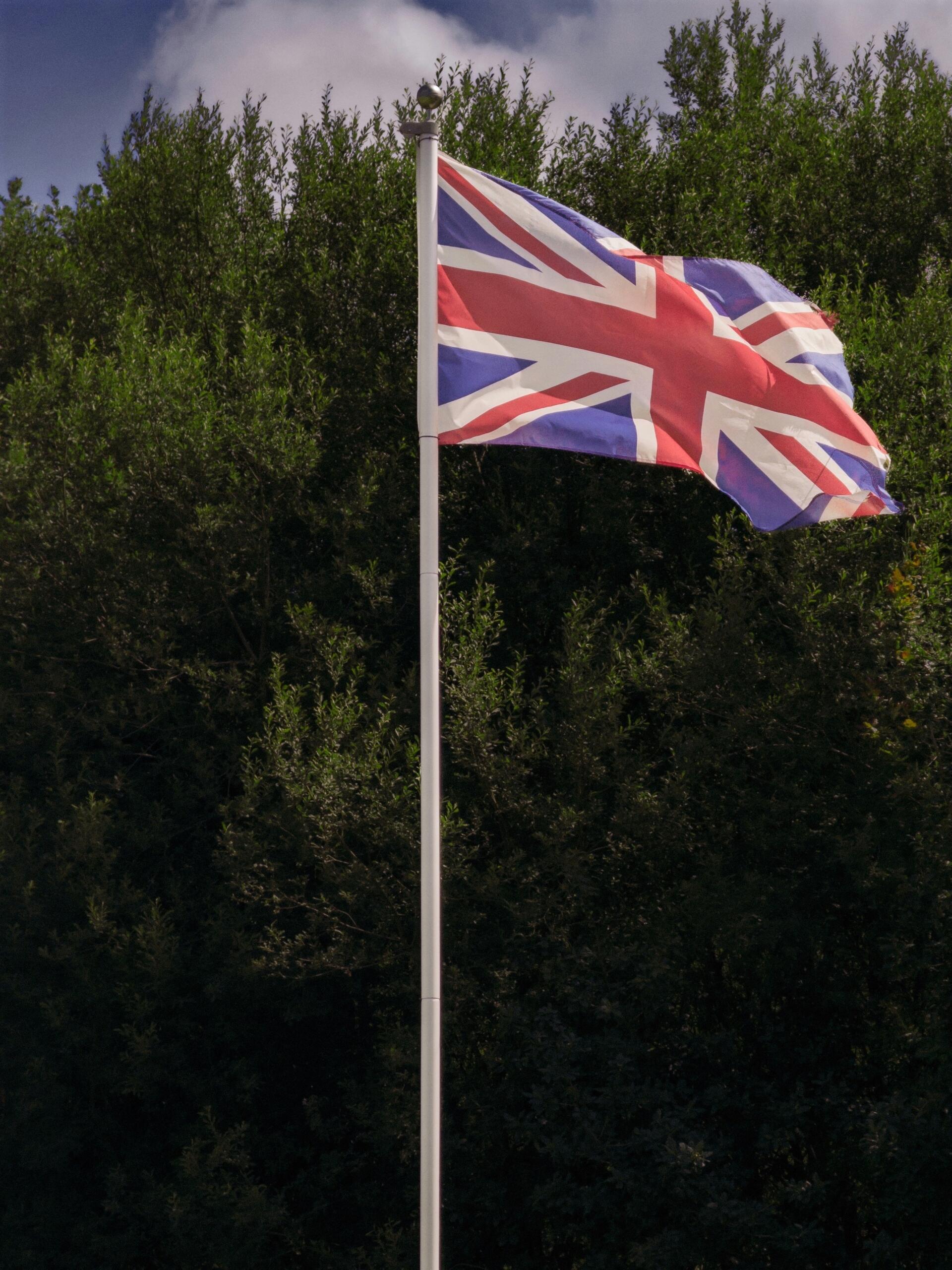
This shift had major consequences. As English expanded in schools and government, Italian gradually declined in official use.
In 1932, learning Italian in Maltese primary schools was banned, and in 1934 Italian was removed as an official language in public administration and legislation. Those changes marked the end of Italian’s old institutional role.
From that point on, English and Maltese increasingly defined the formal linguistic landscape of the islands.
Still, the decline of official status did not mean the disappearance of Italian influence. Languages often outlast political change through habit, literature, family memory and cultural preference. Italian remained important because its roots were already deep in law, education, literature and everyday vocabulary. The language question was not only about practical communication. It also touched on identity, culture and competing visions of Malta’s place in the Mediterranean and within the British Empire.
This is why the historical transition from Italian to English in Malta should not be seen as a simple replacement. It was a gradual rebalancing of languages with different functions. English became more useful in administration, colonial power structures and later international life. Maltese gained ground as a national language. Yet Italian continued to survive as a cultural language and as a visible influence on the Maltese lexicon and imagination.
| Period | Role of Italian | Why it mattered | ||
|---|---|---|---|---|
| Knights of St John | Administrative language | Gave Italian prestige in public life | ||
| 16th to 19th century | Language of law, culture and education | Shaped elite and intellectual life | ||
| British rule | Gradual decline in official use | English expanded in schools and government | ||
| Modern Malta | Cultural and educational presence | Italian remains familiar and widely understood |
Italian Cultural Influence in Malta Today
Even after its decline in official use, Italian remained highly visible in Malta. One reason is geography, i.e. Malta’s proximity to Sicily. The islands remain part of a shared regional space in which travel, media and cultural exchange are easy and frequent. This has helped preserve Italian cultural influence long after the political language question faded from the centre of public debate.
Media played an especially important role in the modern period. Italian television broadcasts from Sicily became widely popular in Malta, giving many households regular exposure to spoken Italian through news, sport, films and entertainment. This kind of contact made the language familiar even to people who had not studied Italian intensively in school. It also reinforced the idea that Italian was still part of the islands’ wider cultural environment.

That familiarity can still be seen today. According to Malta’s National Statistics Office, Italian remains one of the most commonly understood languages in the country, after English and Maltese. In the Malta Skills Survey 2022, 62% of the population reported knowledge of Italian3. That figure shows that the historical legacy of Italian is not just a matter for textbooks. It still has a real presence in contemporary Malta.
The lasting visibility of Italian also reflects a broader cultural closeness. Italian music, television, film and travel continue to feel accessible in Malta in ways that connect naturally with the islands’ history.
So while Italian is no longer the language of courts or official administration, its influence remains visible in speech, vocabulary, education and cultural habits.
Why Italian still matters in Malta
- 🌍 It fits naturally within Malta’s multilingual identity
- 🇮🇹 It has deep historical roots in Maltese public life
- 📚 It was once the main language of education and law
- 🗣️ Maltese contains many Sicilian and Italian influences
- 📺 Italian media remained widely accessible in Malta
- ✈️ Travel and proximity to Sicily keep the language relevant
Why This Influence Still Matters
The Italian influence in Malta matters because it helps explain how Malta became culturally and linguistically distinctive. The islands did not develop under one single linguistic tradition. Instead, Maltese society was shaped by layers of Arabic, Sicilian, Italian and later English influence. Learning the Italian language was especially important because it connected Malta to administration, literature, education and a wider Mediterranean cultural sphere for centuries.
That history is still visible today. It can be heard in Maltese vocabulary, seen in cultural habits and traced through the islands’ educational and literary past. Understanding the Italian language history of Malta also helps explain why many Maltese still understand Italian and why it continues to feel familiar rather than foreign. The language may no longer hold its old official role, but its imprint remains part of Malta’s identity.
📊 Poll: Why do you think Italian still feels familiar in Malta today?
References
- “Maltese language.” Encyclopaedia Britannica, https://www.britannica.com/topic/Maltese-language. Accessed 31.03.2026.
- Brincat, Joseph M. “Maltese: Blending Semitic, Romance and Germanic Lexemes.” Lexikon der Romanistischen Linguistik, De Gruyter, 2017, http://www.um.edu.mt/library/oar/bitstream/123456789/111564/1/Maltese.pdf. Accessed 31.03.2026.
- National Statistics Office. “Malta Skills Survey 2022: Final Report.” National Statistics Office Malta, 19 July 2024, nso.gov.mt/themes_publications/malta-skills-survey-2022-final-report/. Accessed 31.03.2026.
Summarise with AI:
Did you like this article? Leave a rating!

 Loading...