

In Malta, learners rarely follow a single routine for long. Structured lessons, self-study habits, and conversation-based practice often support each other rather than replace each other.
Because of this, people quickly realise there are different ways to study French, and each one shapes the experience differently. Some prefer structure, others prefer exposure, and most move between them over time. Understanding these French study methods makes studying French feel less confusing and easier to continue week after week.


How can you study French in Malta?
In Malta, learners usually encounter four main formats: one-to-one sessions focused on speaking, group learning that builds confidence gradually, online study that supports repetition, and in-person learning that connects language to real situations.
📘 Learners who prefer clarity
They usually feel comfortable when the lesson explains the structure first. Understanding comes before reacting, and confidence grows from knowing why a sentence works.
🌍 Learners who prefer exposure
They become comfortable by trying first and adjusting later. Familiarity appears through repetition, and understanding follows experience.
Before deciding which method suits you best, it is a good idea to explore the Malta French education scene for a broader perspective.
Why Malta Changes the Learning Process
Unlike studying in your home country, Malta creates an environment where exposure happens outside lessons. Conversations in shared apartments, cafés, and international communities turn language learning into a daily activity rather than a fixed study hour.

Here, learning does not stop when a lesson ends. Instead, formal learning and real-life communication interact continuously. That is why choosing the right method becomes more important than choosing a fast one. The right structure determines whether exposure becomes practice or background noise.
One-to-one or Group Learning
After deciding how structured you want your learning to be, the next thing you notice in Malta is interaction. The same lesson can feel completely different depending on whether you are alone with a teacher or sitting with several learners around the table.
With one-to-one learning, everything moves around you. You speak more, you hesitate more, and you also realise your gaps faster. Silence becomes part of the process because there is no one else to fill it. Some learners find this intense at first, but they usually adapt quickly since the conversation never drifts far from their level. The session feels personal, sometimes even tiring, yet very clear.
| Learning type | What increases | Feeling |
|---|---|---|
| One-to-one | Speaking time | Intense but clear |
| Group | Observation time | Relaxed and gradual |
Group learning feels lighter. You are not carrying the whole conversation, and that changes the pressure immediately. You listen more, compare how others form sentences, and often understand mistakes before making them yourself. Progress feels less direct but more relaxed, which is why many learners manage to stay consistent longer in groups. Instead of constant correction, you get gradual familiarity.
Neither format automatically leads to better results. One simply increases speaking time, the other increases observation time. In Malta, many learners alternate between the two without planning to sometimes seeking focus, other times preferring flow.
If you prefer more personal attention over group dynamics, you should consider the benefits that a suitable French teacher could offer for faster results.
🗣️ If you want to speak immediately
You may feel comfortable in one-to-one sessions where silence pushes you to respond and adjust quickly.
👀 If you prefer to warm up first
Group settings let you observe patterns before using them yourself, which reduces pressure early on.

The Independence of Self-Study
Studying French independently in Malta can be surprisingly effective especially if you treat the island itself as part of your routine. While structured lessons provide direction, self-study is often where consistency is built. And consistency, more than intensity, is what moves you forward.
One simple but powerful habit is creating a café study routine. Malta has no shortage of quiet coffee spots in places like Sliema, Valletta, or even quieter corners of St Julian’s.
Choosing one café as your “French spot” builds mental association. You sit down, order your coffee, open your notebook and your brain switches into studying French mode.
Review vocabulary, rewrite yesterday’s corrections, or summarise a short article in French. The ritual matters as much as the content.
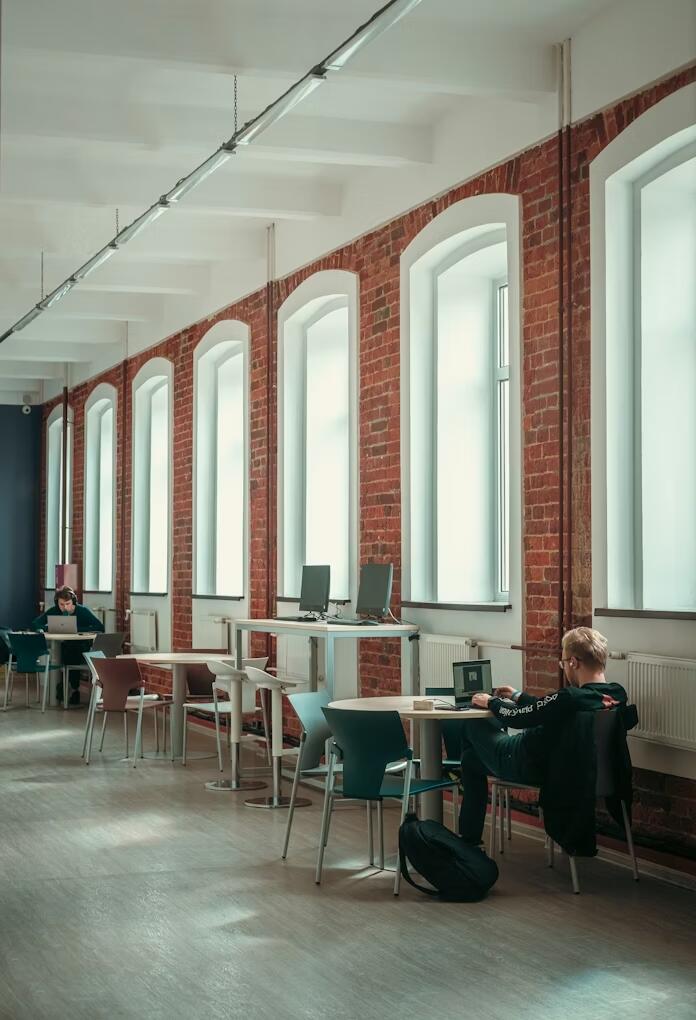
Another underestimated tool is using French podcasts during your commute. If you use a Tallinja bus or walk to work, that time can become passive exposure. Even if you don’t understand everything, listening regularly trains your ear. News summaries, slow-paced learner podcasts, or short storytelling episodes can gradually improve comprehension. The goal isn’t perfection. Rather, it’s familiarity.
For more structured independent work, flashcards and spaced repetition systems are extremely effective. Apps like Anki or Quizlet allow you to review vocabulary just before you’re likely to forget it. Ten focused minutes a day often produce better retention than a long, unfocused study session once a week. This method works especially well if you’re preparing for an exam such as the DELF, where vocabulary recall under pressure matters.
- 📅 A Simple Weekly Self-Study Structure
- 🎧 3x 15-minute French podcast sessions
- 🗂 5–10 minutes of flashcards daily
- ✍️ 2 short journal entries per week
- 💬 1 language exchange conversation
If you prefer something more reflective, French journaling can deepen active usage. Writing a few sentences daily about your day in Malta what you saw, who you met, what you struggled with forces you to search for vocabulary and structures you might otherwise avoid. Over time, you’ll notice recurring gaps. Those gaps become your next learning targets.
Technology also opens doors through language exchange apps. Platforms like Tandem or HelloTalk connect you with native speakers. Even one short conversation per week builds confidence. The key is setting realistic expectations: short voice messages, simple exchanges, and gradual progress.
Write 5 sentences about your day in French.
Describe one small difficulty you had.
Record yourself reading it out loud.
Finally, don’t overlook library study spaces. The National Library of Malta in Valletta offers a quiet, focused environment, while local public libraries around Sliema provide calm alternatives to busier cafés. Changing environments occasionally can refresh motivation and help you avoid routine fatigue.
Independent French study in Malta works best when it blends structure with daily life. Lessons introduce direction. Self-study builds habit. And when those two reinforce each other, improvement starts to feel steady rather than forced.
Day 1
10-minute podcast
Choose a short French podcast episode (preferably made for learners). Don’t aim to understand everything. Focus on catching familiar words and the overall topic. Afterwards, write down 5 new expressions you heard.
Day 2
Journal entry
Write 5-8 sentences about your day in Malta. Keep it simple. Describe where you went, who you spoke to, or something that surprised you. If you’re unsure about a word, look it up and note it down for later review.
Day 3
Flashcards
Review vocabulary from the past two days. Use spaced repetition if possible. Say the words out loud instead of only reading them silently pronunciation matters as much as meaning.
Day 4
Voice message
Record yourself summarising your journal entry in French. It doesn’t have to be perfect. The goal is to practise forming sentences without stopping too long. If you use a language exchange app, send it to your partner.
Day 5
Short Conversation
Have a 10-15 minute exchange with a native or advanced speaker. Prepare 2-3 simple questions in advance so you don’t freeze. Keep the conversation manageable and realistic.
Day 6
Review and Reflect
Look back at your notes from the week. Which words keep appearing? Which mistakes repeat? Circle them. Those are your personal learning targets for next week.
Day 7
Free Speaking Attempt
Set a timer for 5 minutes and speak in French about anything your plans, your week, your thoughts. Don’t interrupt yourself to correct mistakes. Fluency grows when you allow yourself to continue.
Regardless of the method you choose, remember that consistency matters more than intensity, so practising French every day keeps your knowledge active and easier to recall.
Online or in-person learning
In many places, choosing between online and in-person lessons is mostly about schedule. In Malta, it changes how the language stays in your mind.
Online sessions create a clean learning space. You log in with attention, deal only with the topic, and close the call once it ends. Because nothing interrupts it, understanding often feels clearer. You know what you covered that day, and it is easier to repeat regularly even during busy weeks.
🧭 Which learning environment matches you?
- 🔁 I remember better when I repeat → Online suits you
- 🎭 I remember better when I experience → In-person suits you
- 🏠 I lose focus at home → In-person
- ⏰ I need flexible hours → Online
- 📋 I like structure → Online
- 🌍 I like spontaneity → In-person
But the moment the session finishes, your environment usually switches back to your native language. The knowledge remains organised, yet slightly distant, almost like something stored rather than lived.
In-person learning behaves differently here. The lesson rarely starts at the exact moment the class begins. You hear people speaking before entering, notice familiar words on signs, and sometimes continue small conversations afterwards. The topic doesn’t stay inside the study hour; it leaks into the rest of the day.
That is why learners often remember situations instead of rules. A phrase is connected to a place, a reaction, or a moment of hesitation. Later, recalling the situation helps recall the language. Malta naturally reinforces this because daily routines constantly repeat similar interactions: ordering, asking, reacting, clarifying.
| Memory type | Online learning | In-person learning |
|---|---|---|
| How you remember | By repetition | By situation |
| After 1 week | Clear but abstract | Slightly vague but familiar |
| After 1 month | Needs revision | Comes back naturally |
| Trigger | Notes | Context |
Over time, many learners realise the difference is not about efficiency but about retention. Online learning supports continuity when life gets busy. In-person learning attaches memory to experience. Using only one may feel incomplete, which is why people often combine them without planning to: structured sessions for clarity, physical presence for familiarity.
The surrounding context does, and that context shapes how long the language stays accessible in your mind.
💻 Online learning feels
Focused and contained 🎯
🌍 In-person learning feels
Contextual and memorable 🧠

Image credit: UC San Diego Extended Studies
Choosing based on your routine, not your motivation
People often choose a study method based on how motivated they feel at the beginning. In reality, the first weeks rarely predict the following months. What usually matters more is how easily the method fits into an ordinary day.
A learner with a flexible schedule might enjoy longer focused sessions, while someone with changing hours may depend on shorter but repeated contact with the language. The difference is not discipline, it is friction. The less a method interrupts daily life, the longer it continues.
In Malta this becomes noticeable quickly. Some learners plan dedicated study time but end up practicing mostly through daily interactions. Others prefer separating learning from daily life so they can clearly see progress. Both approaches work, yet for different routines.
Instead of asking how intensively you want to study, it can be more helpful to ask when the language can appear naturally during your week. The answer often suggests the method.
| Your routine | Method that usually feels sustainable |
|---|---|
| Irregular daily schedule | Short frequent contact |
| Fixed weekly timetable | Planned study sessions |
| Mixed or unpredictable days | Combining approaches |
When practice happens outside the lesson
One detail many learners notice after a short time in Malta is that improvement rarely matches the number of study hours. Instead, it often matches the number of small reactions during the day.
Answering a simple question, asking someone to repeat, and clarifying a misunderstanding are small moments that require attention. These moments are short but demanding. They force attention in a way exercises cannot fully recreate. Because they are unpredictable, the brain treats them as meaningful and stores them differently.
Some learners prefer preparing before speaking. Others discover they start understanding only after attempting to respond. Neither behaviour is wrong; they simply activate practice at different moments. The environment makes both possible. A structured session may introduce something in the morning, and an ordinary situation repeats it later without planning.
💡 Real improvement often follows daily micro-interactions, not total study hours.
Over time, learners stop separating study and use. The lesson introduces patterns, and daily situations test them. The repetition does not look repetitive, yet recognition grows. This is often when confidence appears not suddenly, but quietly.
This is usually the point where learning feels less controlled and more natural.
Feedback plays a similar role. Some learners improve by being corrected immediately, others by noticing misunderstandings later during conversation. Neither timing is superior; they simply support different awareness processes. Over time, recognising mistakes becomes faster than avoiding them, which is usually the moment fluency begins to stabilise.

Real situations you start noticing
- asking for clarification
- reacting instead of translating
- understanding tone, not only words
If your goal is a professional career, ensure your chosen study path helps you to prepare for DELF exams in the long run.
The most effective ways to study French are the ones that fit naturally into your week. When your method aligns with your routine, progress becomes steady rather than forced. Bonne chance!
Summarise with AI:
Did you like this article? Leave a rating!

 Loading...