
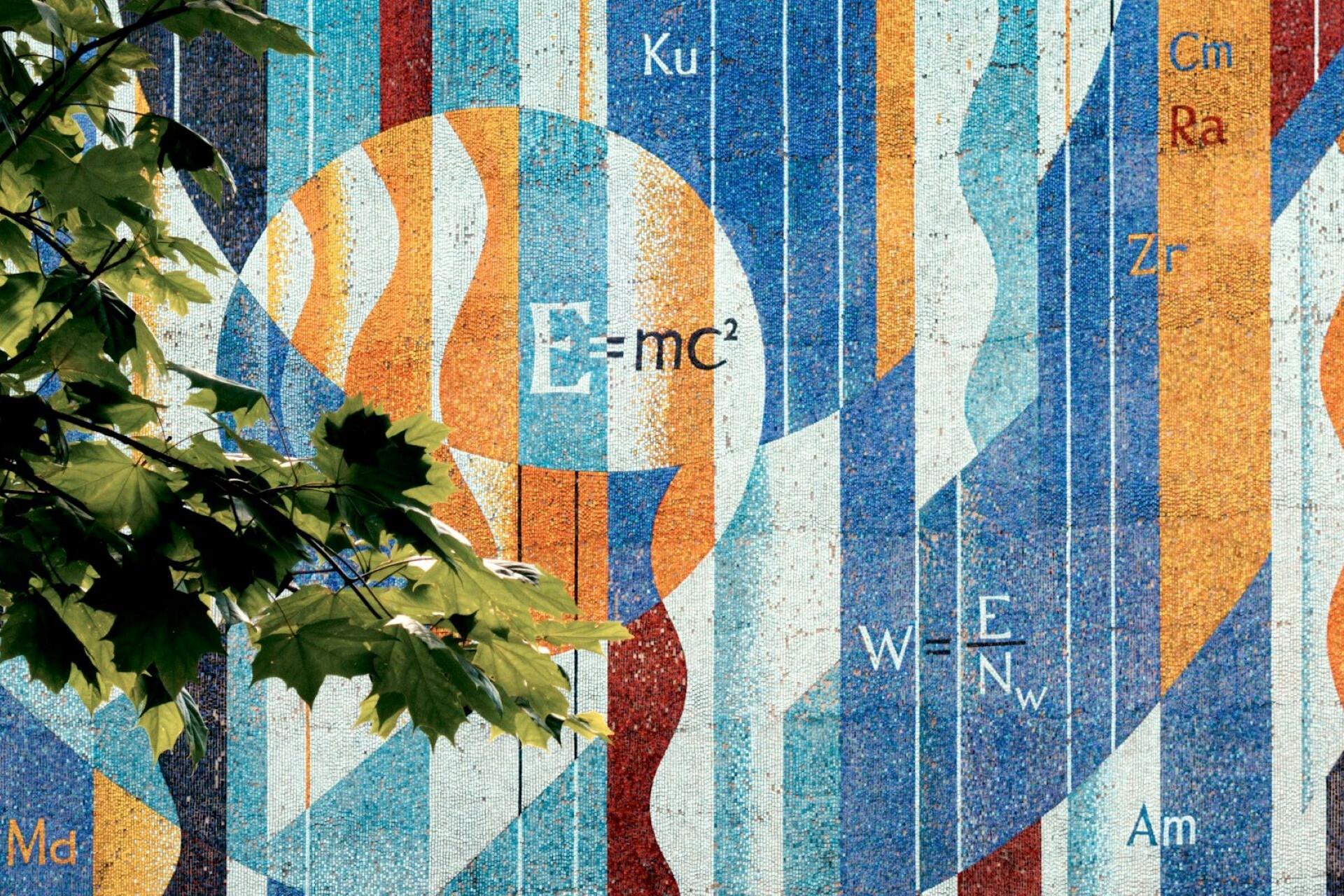
Physics Nobel Prize: A Historical and Scientific Overview
The Nobel Prize in Physics: A Comprehensive Overview The Nobel Prize in Physics is the most prestigious honour in its field. It celerated discoveries in physics and has been awarded annually since 1901. Let's explore the background of the accolade. History and Significance of the Nobel Prize in Physics The Nobel Prize is the highest[…]
18 December 2025∙8 minutes to read
Need help learning Physics?
Our physics tutors in Malta have created a series of articles to help you better understand this fascinating and challenging subject.
Explore the key topics covered in SEC and Advanced Matriculation (AM) Physics, along with practical revision tips and study guidance tailored to the Maltese curriculum.
You can also find an online physics tutor to support your preparation for SEC or Advanced Matriculation exams.
Physics helps us understand how the physical world works. It explores matter, motion, energy, force, space, and time, and explains how these elements interact. From the movement of planets to the behaviour of electricity in your home, physics provides the laws that govern the natural world.
In Malta, physics is studied at secondary level as part of the Secondary Education Certificate (SEC) and can later be continued at Advanced Matriculation (AM) level. Many students who develop a strong interest in the subject choose to pursue physics or physics-related fields at the University of Malta or other higher education institutions.
Let’s take a closer look at why physics is such an important subject and what it can offer.
Why Study Physics?
Whether you are a secondary school student preparing for SEC exams or an adult learner considering returning to science, physics offers valuable benefits.
1. Physics is the foundation of many sciences
Subjects such as chemistry, engineering, astronomy, and environmental science rely heavily on physical principles. If you are interested in pursuing science or technology-related studies, a solid understanding of physics is essential.
2. Physics builds transferable skills
Studying physics develops analytical thinking, logical reasoning, mathematical competence, and problem-solving skills. Students also learn how to interpret data, apply formulas, and approach complex problems step by step. These abilities are highly valued in many professions beyond science.
3. Physics opens doors to stable careers
Physics-related careers often offer strong employment prospects and competitive salaries. Skills gained through physics are in demand in sectors such as engineering, IT, finance, education, research, and renewable energy. In Malta, graduates with strong science backgrounds are particularly valued in growing technical industries.
While physics can be challenging, the long-term rewards often outweigh the initial difficulty.
What are the Main Branches of Physics?
Physics is divided into several major branches to organise its many laws and theories. Students preparing for SEC or Advanced Matriculation exams will encounter many of these areas.
The main branches include:
- Mechanics – motion, forces, velocity, acceleration, and energy
- Thermodynamics – heat, temperature, and energy transfer
- Waves and Vibrations – sound waves, wave motion, and oscillations
- Optics – light, reflection, refraction, and lenses
- Electromagnetism – electricity, magnetism, and circuits
- Relativity – space, time, and gravity at large scales
- Quantum Mechanics – behaviour of particles at atomic and subatomic levels
At SEC level, students focus primarily on foundational areas such as mechanics, electricity, waves, and energy. Advanced Matriculation expands into more complex theoretical topics.
What Are Careers in Physics?
If you loved your study of physics so much during high school that you decided to continue learning at a university level, you are preparing yourself for a stable job in the sector of physics. But what are the most common jobs for physics majors upon graduation?
Common career paths include:
- Engineer
- Data analyst
- IT consultant
- Laboratory technician
- Secondary school physics teacher
- University lecturer or researcher
- Applications engineer
- Technical consultant
Because physics develops strong quantitative and analytical skills, graduates are employable in finance, technology, energy, aviation, and scientific research sectors. In Malta, demand for STEM-related expertise continues to grow.
Top Tips for Studying Physics
Since physics is such a diabolical academic discipline, it comes as no surprise that individuals face difficulties when reviewing physics. Thankfully, there are suggestions from experienced ones on how to ace physics like a boss. Such as?
First and foremost, you need to master the basics like velocity, distance, development, and kinetic energy since, without a solid foundation, there is no way you’ll be able to advance to more complex terms such as quantum physics.
Secondly, do your homework. If you don’t take an active interest in your learning, you’ll undoubtedly fail your final exams. Listen in class and regularly do your coursework assignments to avoid falling behind.
Thirdly, talk with other physics students by joining study groups. The frank conversations and brainstorming sessions you’ll have with other like-minded pupils will add variety to your stale study routine while at the same time helping you to fill any gaps in your learning. If you follow all three of these suggestions, you’ll ace physics like the champion you are!
Physics deepens our understanding of the universe and develops valuable academic and professional skills. Whether you are studying for SEC, Advanced Matriculation, or exploring physics as an adult learner, consistent effort and the right support can make this challenging subject both rewarding and achievable.